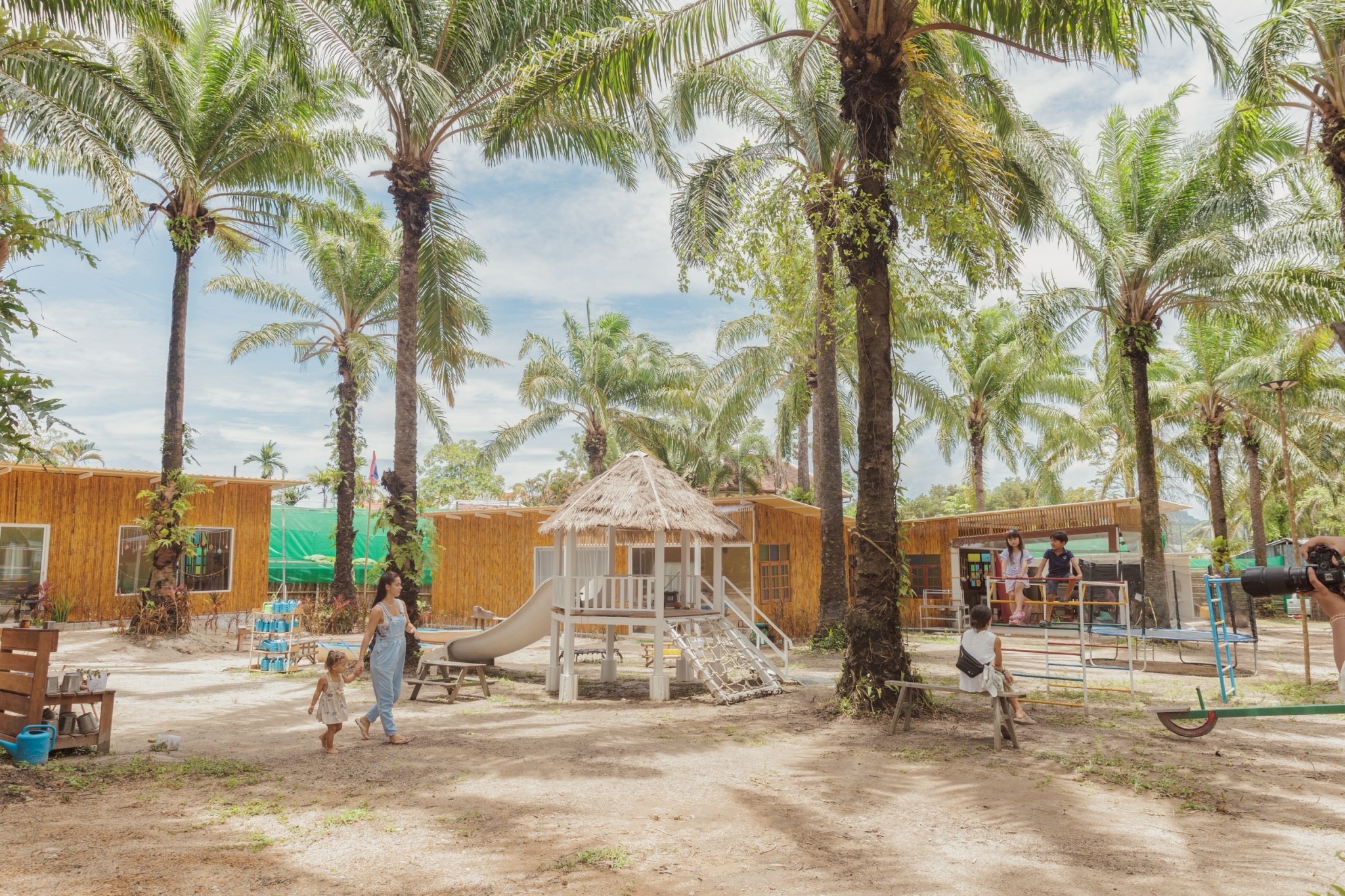
Parents often ask: "What does a typical day look like?" Here's a peek behind the gate — from the moment your child arrives until pickup, with all the play, wonder, mud, and joy in between.
Arrival & Free Play
You walk your child to the classroom, share a quick hug, and they're off. They drop their bag and go straight into free play. No waiting, no lining up. The classroom is ready: wooden blocks, train tracks, a play kitchen, puppets, dress-up clothes, a drawing table. They choose what they want to do.
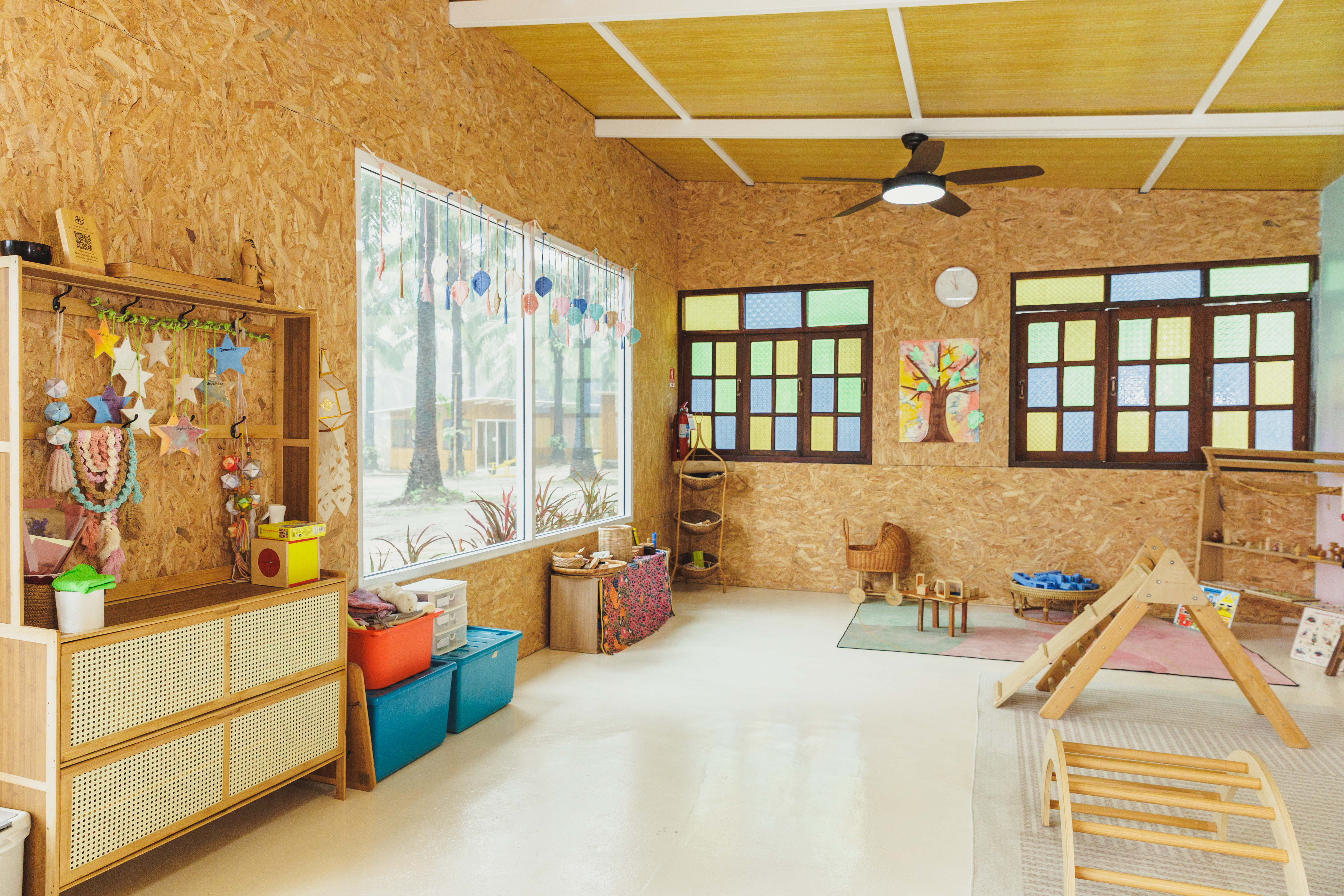
Is it just playing, or are they learning?
Both. When children choose their own activity, they develop independence, creativity, and intrinsic motivation.
And phonics is woven in — the teacher quietly pulls two children at a time for 5-10 minutes of one-on-one work, then they return to play. Every child, every day.
What does the teacher do during free play?
Observes. Supports when needed. But doesn't direct. The children lead.
The teacher watches, learns what each child gravitates toward, and steps in only when necessary.
What if my child prefers to play alone?
That's fine. Some children love collaborating — running pretend restaurants, building together. Others prefer solo time at the drawing table or quietly building train tracks.
Both are welcome. Both are valuable.
Circle Time
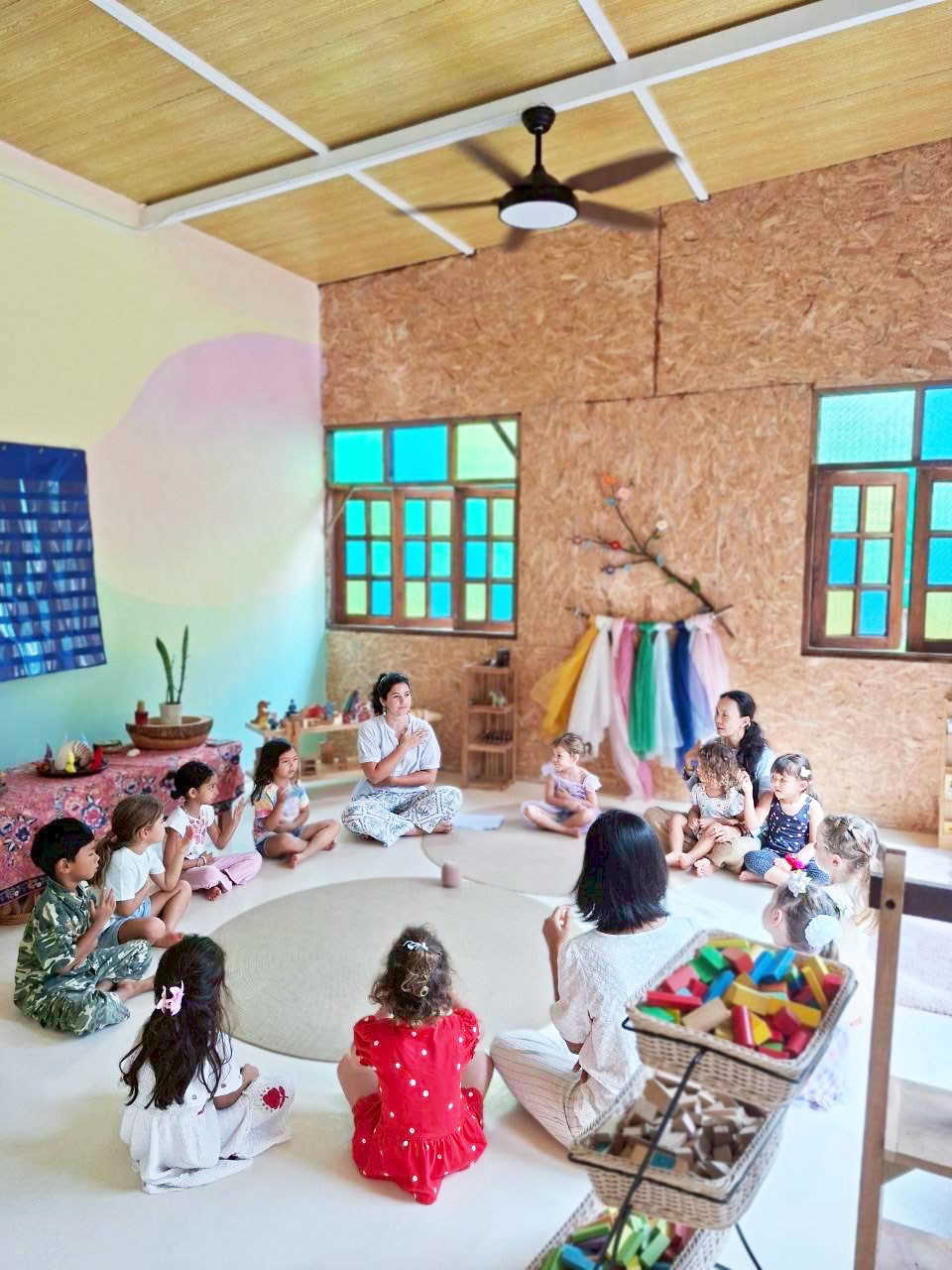
The teacher rings a small bell and begins to sing. Children know the tidy-up song by heart — they put toys away slowly, take a water break, and gather on the round rug. Circle time begins the same way every day: the same greeting song, the same gentle rhythm.
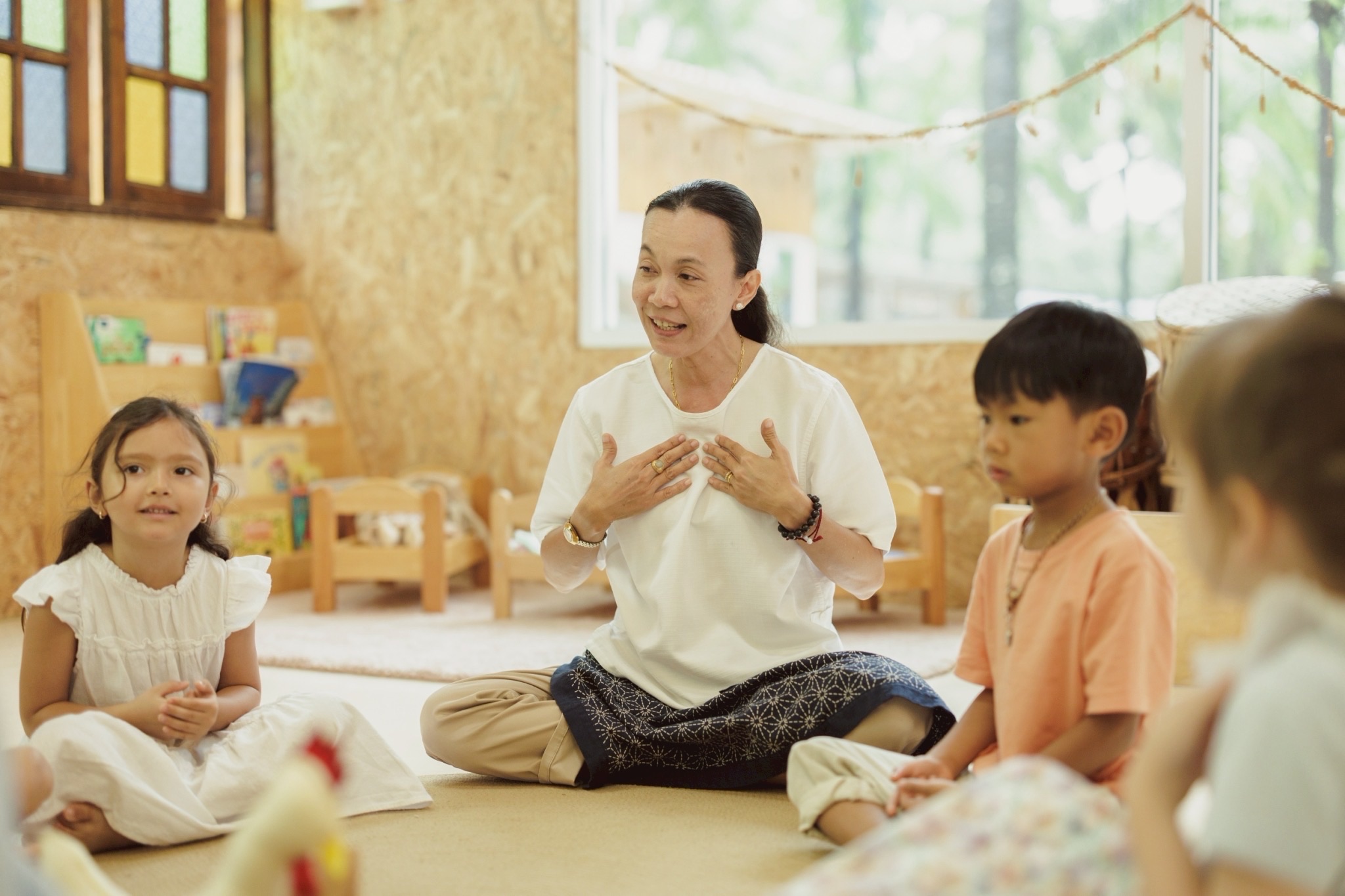
Why the same songs every day?
Repetition is intentional. When children know what's coming, they feel secure. The songs change with the seasons — summer songs, rainy season songs — but the rhythm stays constant.
Movement songs help with crossing the midline (a Waldorf concept called eurythmy), building coordination and focus.
What's the candle passing?
Children pass a candle carefully around the circle. It's about experiencing kindness — that moment of giving and receiving has a warmth to it.
By doing this over and over, kindness starts to become part of their nature. Not something they're told, but something they feel.
How do new children adapt?
Because of the consistent rhythm, we don't really need to explain the rules — children naturally get absorbed into the flow.
Day one might feel strange. We let them explore, sit, and listen. Day two, day three, they slowly start participating. After 2-3 days, they know the songs and enjoy joining in.
What if a child isn't ready to join?
We never force. If a child isn't ready, they sit somewhere nearby with a teacher and wait until they're ready.
When they're ready, they come and join naturally. No pressure, no rush.
Snack Time
After circle time, children hold hands and become a snake. They sing the snake song together as they wind their way to the kitchen — one long line of little ones, laughing and stepping in rhythm. Snacks are already waiting on the table.
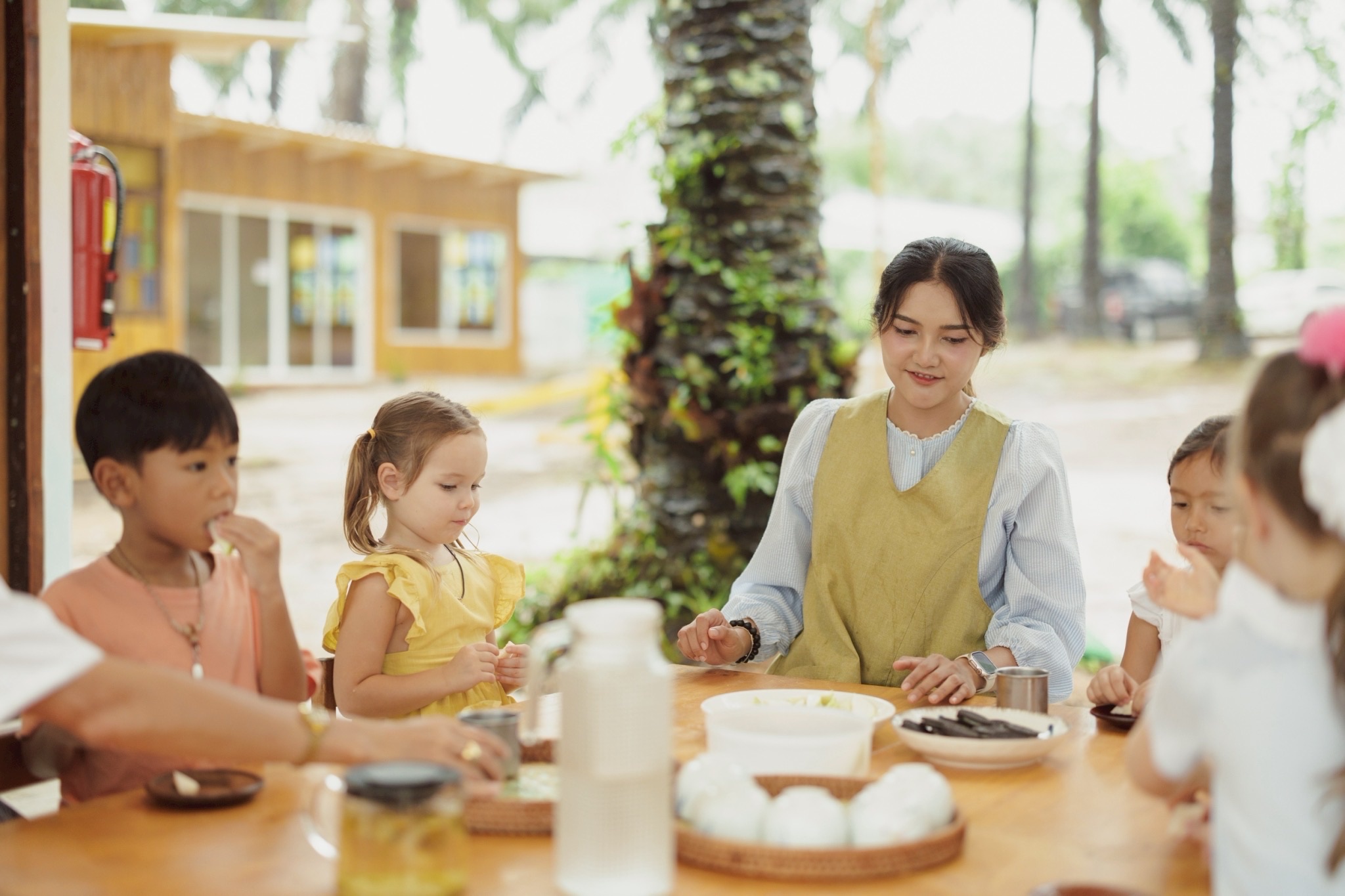
Why do they sing on the way to snack?
Transitions can be chaotic. The snake song turns walking to the kitchen into a game — everyone holds hands, stays together, and arrives calm and ready to eat.
It's a small thing, but it makes a big difference.
What do they eat?
Fresh fruit, sliced right in front of them so they can see and experience it. Sometimes a cookie or biscuit afterward — but never too sweet. Just healthy options.
What's the gratitude song?
Before eating, everyone sings a "Thank You to Mother Earth" song — expressing gratitude for the food.
It's a moment to pause, appreciate, and begin the meal together.
Mid-Morning Activities
After snack, each day brings something different. Some days it's baking bread. Others it's painting with just one color. Or exploring instruments. The rhythm of the week gives children something to anticipate.
Baking
Kneading dough, shaping bread, learning math through measuring and counting.
Waldorf Painting
One color at a time. Meditative, focused, discovering how colors work.
Music
Freely exploring instruments — strings, percussion, wind. Singing together.
Outdoor Free Play
Trampoline, monkey bars, mud kitchen, digging, sand play.
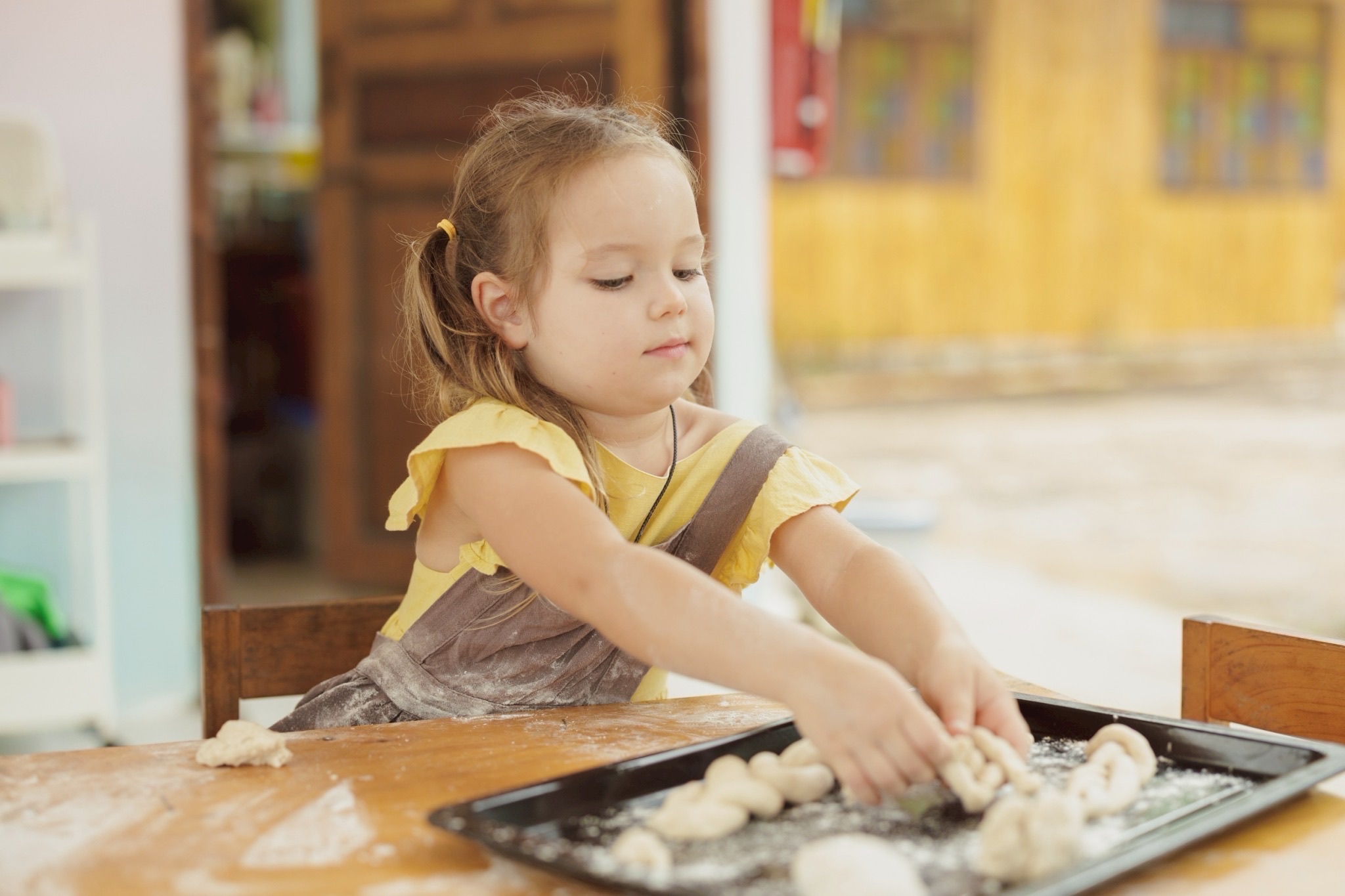
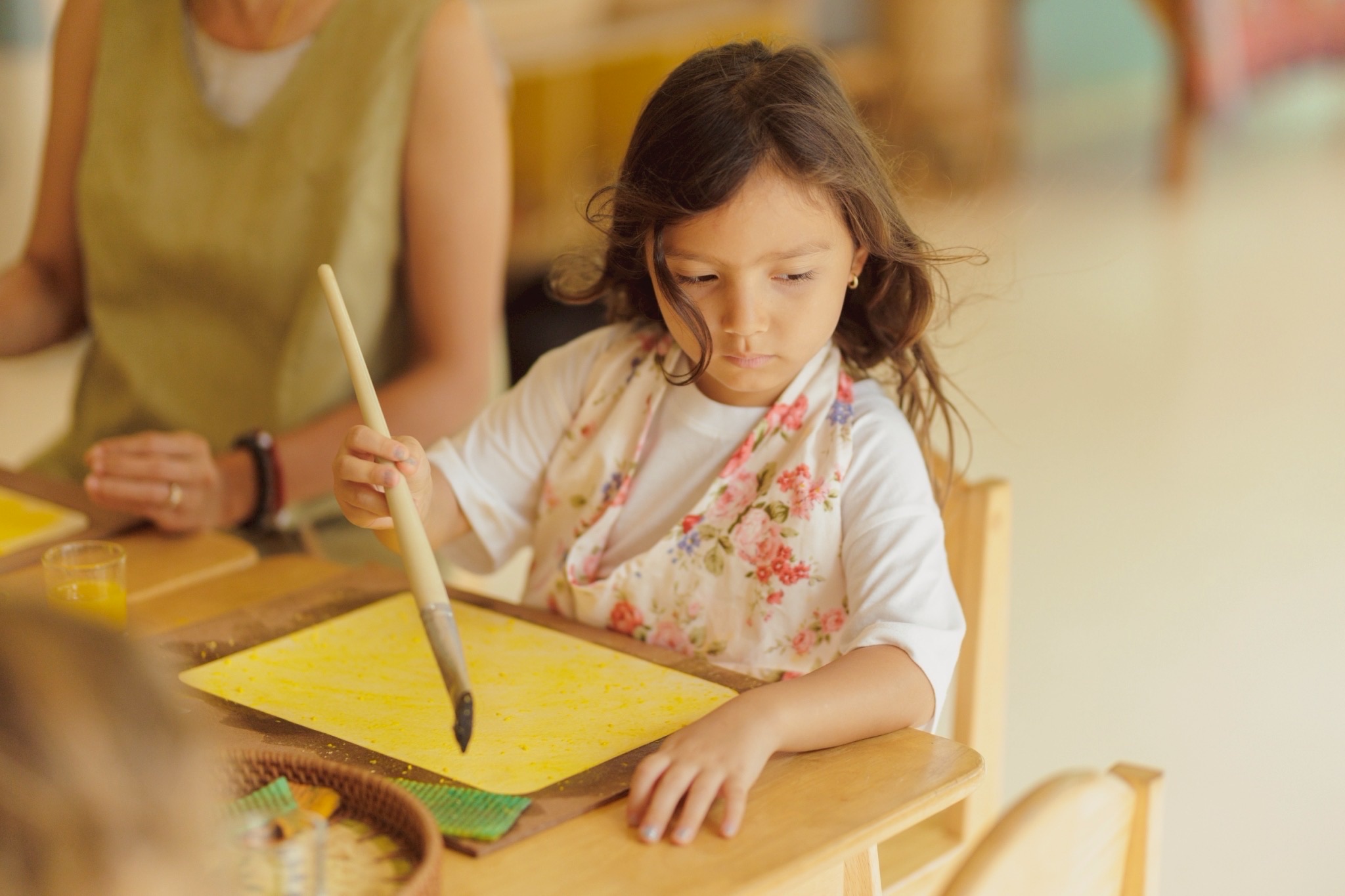
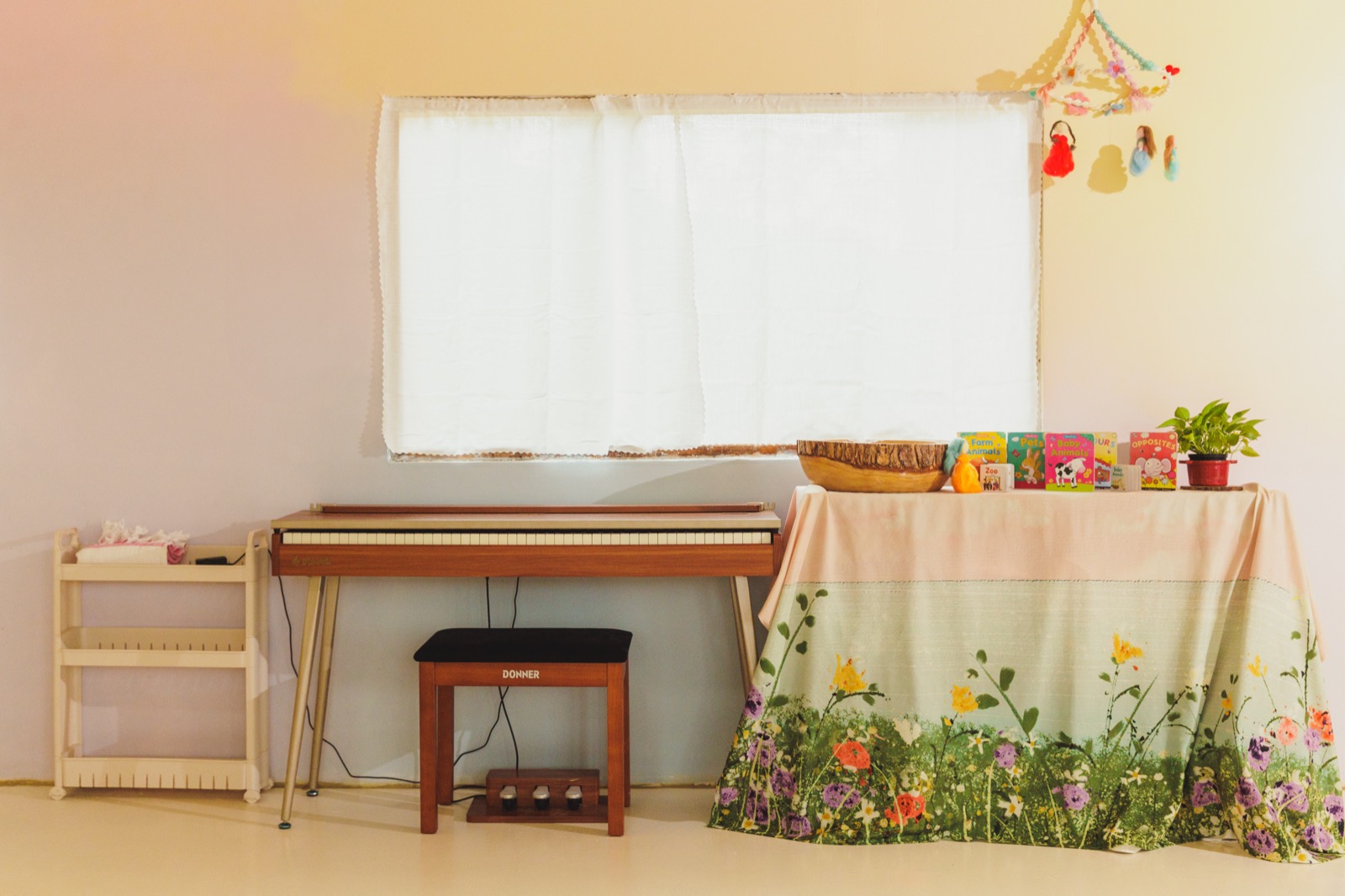
Baking Day — shaping dough into unicorns, donuts, and dreams
Why baking?
Baking is a Waldorf tradition. Small hands kneading dough strengthens fine motor skills. Cutting, counting pieces, comparing sizes — math happens naturally.
Children create shapes: unicorns, donuts, whatever they imagine. Even when it doesn't turn out perfectly, they're so proud — because it's their creation.
Why only one color when painting?
Waldorf painting is different. Children work with one color for a whole month — yellow every Thursday, then red, then blue. Only primary colors at first.
After they've explored each one, they get two colors at a time and discover the magic of mixing. The teacher plays a tongue drum — it's meditative, quiet, peaceful.
What happens during music time?
Children freely explore different instruments — strings, percussion, wind instruments. They sing songs together, sometimes indoors, sometimes outside.
The teacher plays ukulele or guitar while they sing kindergarten songs together.
Outdoor Free Play
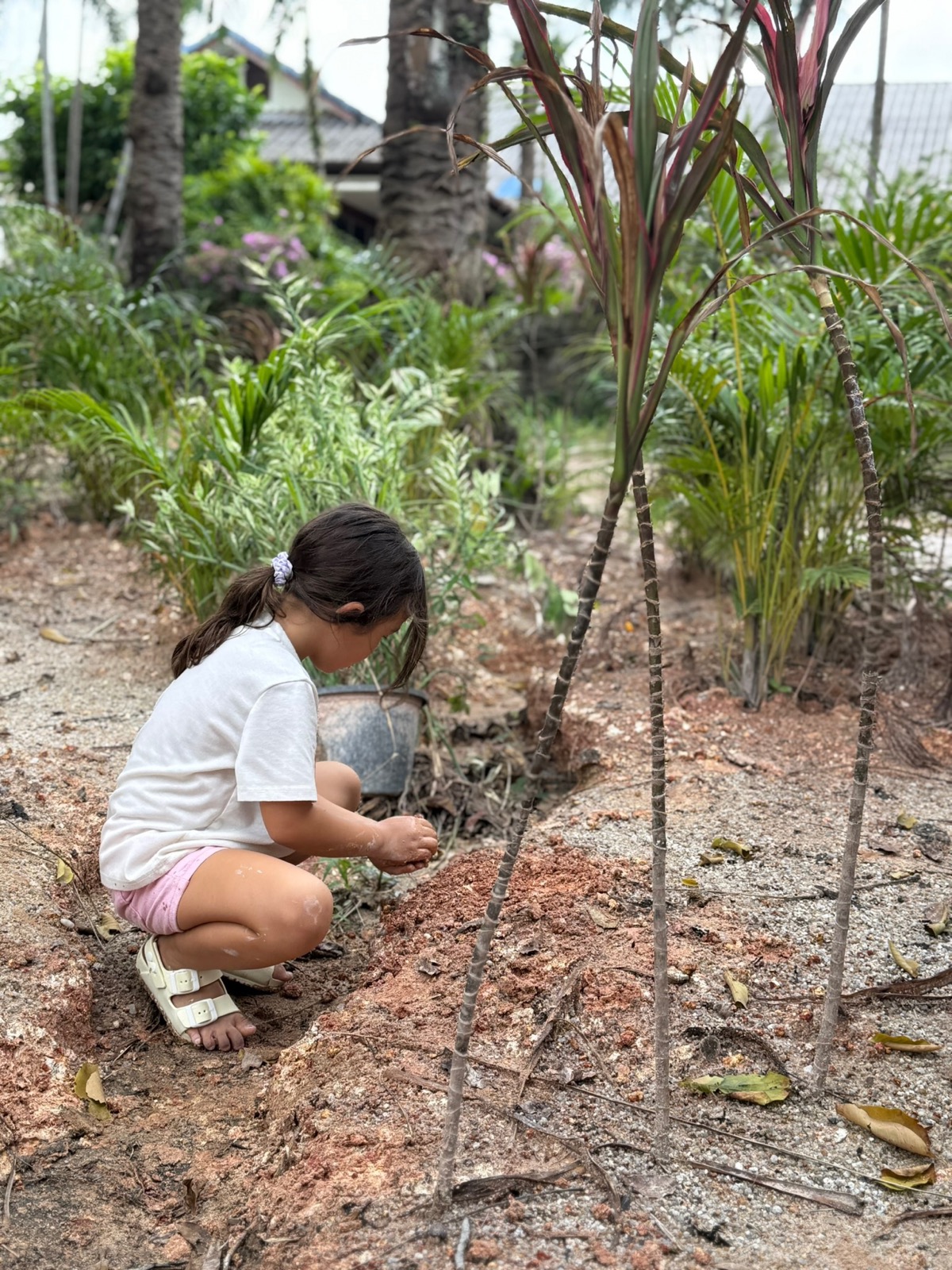
This is when something magical happens. Children head outside to the trampoline, monkey bars, mud kitchen, digging area, sand pit. There's no agenda. No adult-directed activity. They choose what they want to do — and they lose themselves in it completely.
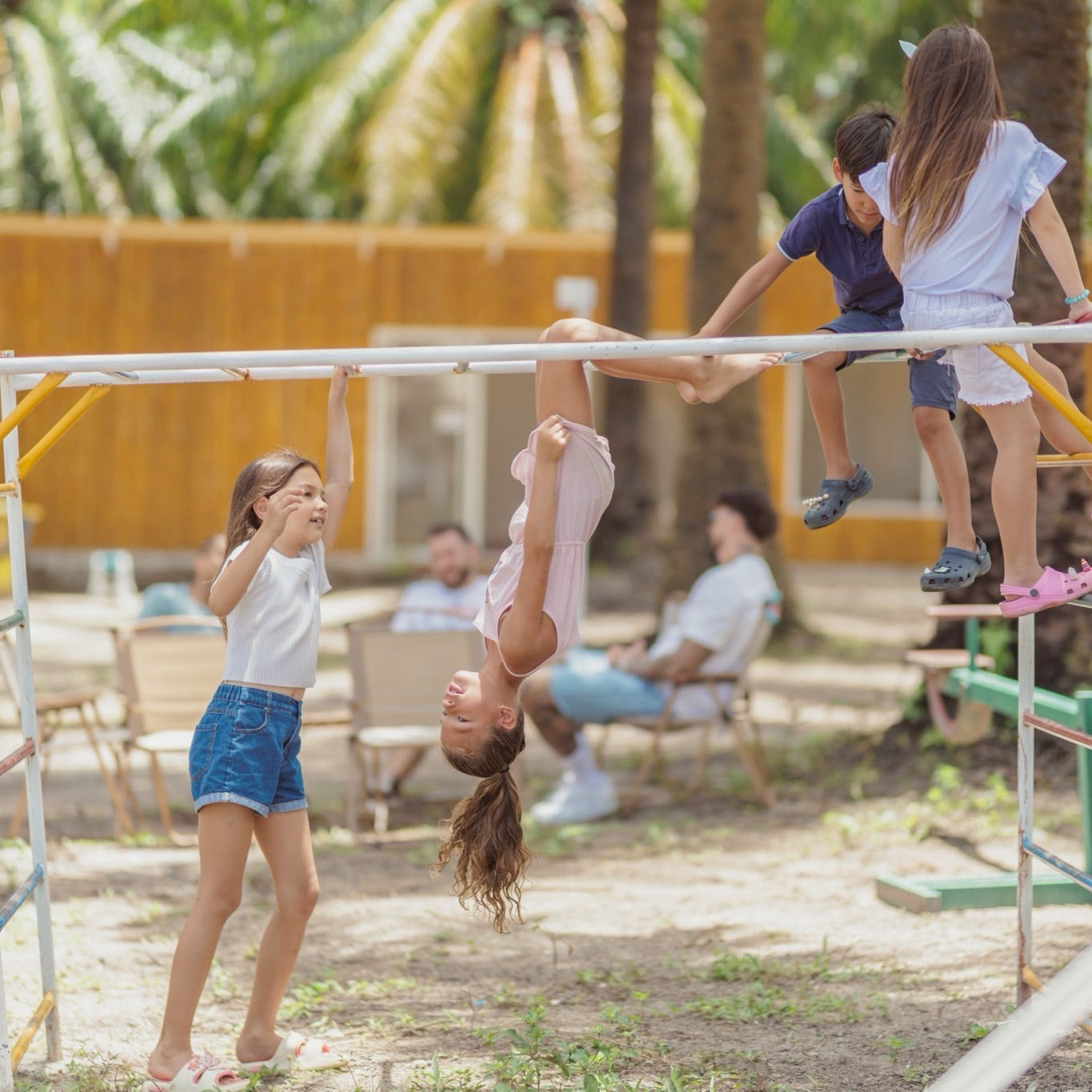

Climbing, swinging, hanging upside down — physical play builds confidence
What is "flow state" and why does it matter?
Flow state is that deep absorption you see when a child is completely lost in what they're doing. Time disappears. They're not bored, not anxious — just fully present.
This is when the deepest learning happens. Not from instruction, but from complete engagement with their own chosen activity.
What do children actually do during outdoor free play?
Everything. Bouncing on the trampoline. Swinging from monkey bars. Digging holes and building structures. Creating mud pies in the mud kitchen. Collecting leaves and sticks.
Some children spend 45 minutes just digging. Others run between activities. Both are exactly right for that child in that moment.
Why is unstructured time so important?
When adults aren't directing, children develop initiative. They make decisions, solve problems, negotiate with peers. They learn to occupy themselves — a skill many adults struggle with.
Modern children often have every minute scheduled. Here, they rediscover the art of simply playing.
Is it safe with climbing and physical play?
Teachers are always present, observing. But they don't hover. Children need to assess risk themselves — "Can I reach that branch?" "Is this too high?"
Small bumps and scrapes are part of learning. We keep children safe while still letting them be brave.
Cleanup & Story Time
After outdoor play, the bell rings again. Children help put things away — not because they're told to, but because it's part of the rhythm. Then they gather on the rug for a story. The teacher doesn't read from a book. She tells it — looking into their eyes, using her hands, bringing characters to life.
Why do children help with cleanup?
It's not a chore — it's part of the flow. When everything has a place and children know the routine, cleanup happens naturally. They take pride in caring for their space.
This builds responsibility without lectures about responsibility.
Why tell stories instead of reading books?
When a teacher tells a story without a book, something changes. There's eye contact. The pace adjusts to the children's reactions. The story becomes alive in the room.
Children's imaginations do the work of creating the pictures — far more powerful than any illustration.
What kinds of stories do they hear?
Fairy tales, nature stories, seasonal tales. Stories with clear images and gentle rhythms. Often the same story is told for a whole week — children love the familiarity and notice new details each time.
Lunch
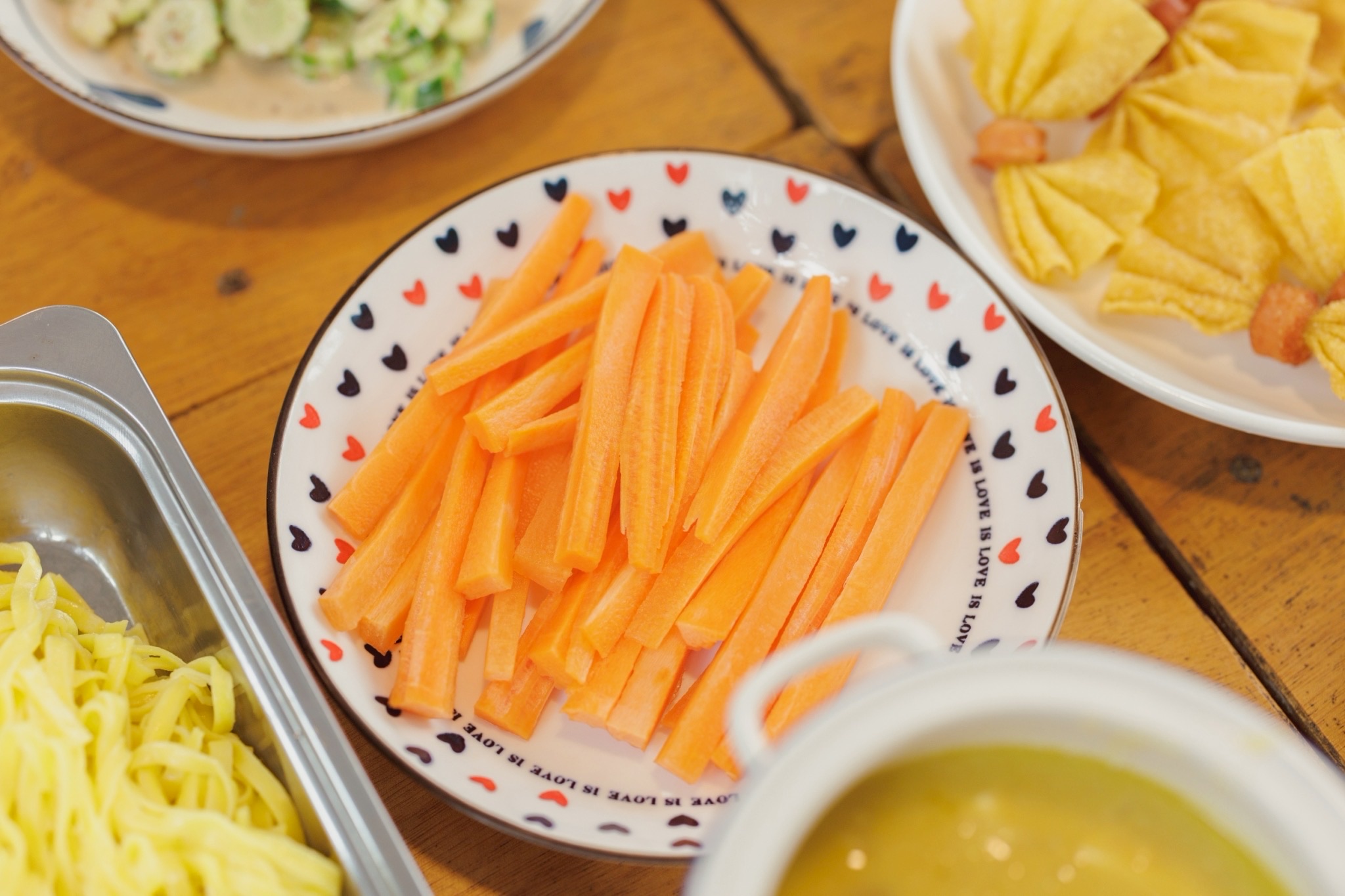
Children bring lunch from home or eat what the school provides — simple, healthy Thai food. They sit together at low tables, teachers beside them. No rushing. No "finish your plate" pressure. Just a calm, communal meal.
What do children eat for lunch?
Simple, wholesome food. Rice with mild Thai dishes, vegetables, fruit. Nothing processed, nothing too spicy. If parents send lunch, we encourage healthy options — no candy or sugary drinks.
What if my child is a picky eater?
We don't force. We offer. Children see their friends trying new foods, and slowly, they get curious. No battles, no bribes — just gentle exposure over time.
Many parents are surprised when their child starts eating vegetables they refused at home.
Do teachers eat with the children?
Yes. Teachers sit at the table and eat the same food. This models healthy eating and makes lunch feel like a family meal rather than an institutional feeding time.
Quiet Time
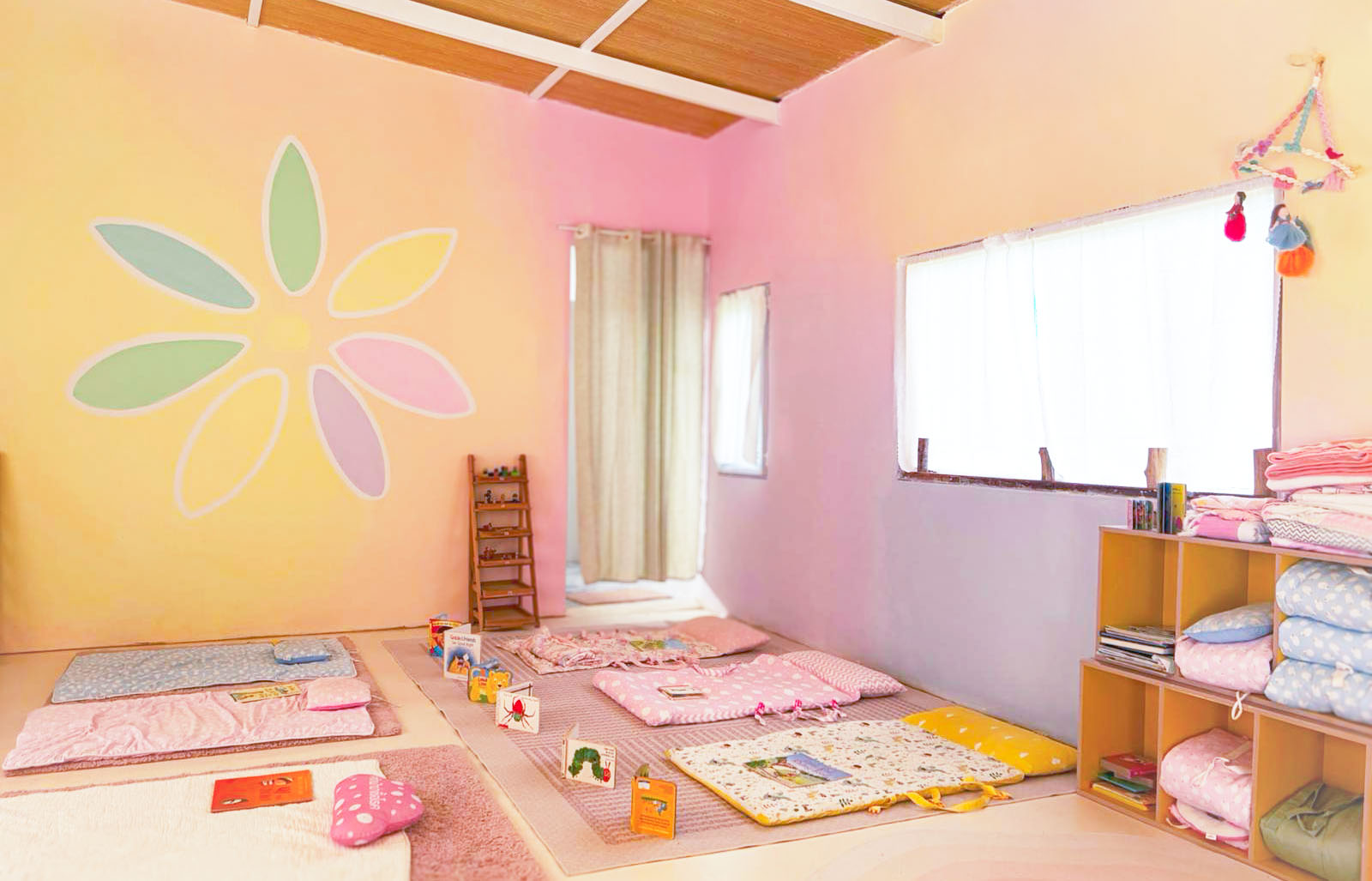
After lunch, the energy shifts. Younger children lie down on soft mats with blankets, and many drift off to sleep. Older children who don't nap have quiet time — drawing, looking at picture books, or simply resting. The room stays dim and peaceful.
Do all children have to nap?
No. Younger children (2-4) usually need sleep and are encouraged to rest. Older children who've outgrown naps have quiet activities instead — but everyone has downtime.
The body and mind need this pause, even if sleep doesn't come.
What if my child won't sleep at school?
That's okay. Some children take weeks to feel comfortable enough to sleep in a new place. We don't force it — we just create the conditions for rest. A dark room, soft music, a gentle back rub.
Eventually, most children relax into the rhythm.
How long is quiet time?
About an hour. Long enough for real rest, but not so long that it disrupts nighttime sleep. Children who wake early can quietly look at books until everyone is ready.
Afternoon Activities
Children wake gently from rest and ease back into the day. The afternoon is calmer than the morning — feeding the animals, watering the garden, gentle yoga, or nature crafts. The energy winds down naturally as pickup time approaches.
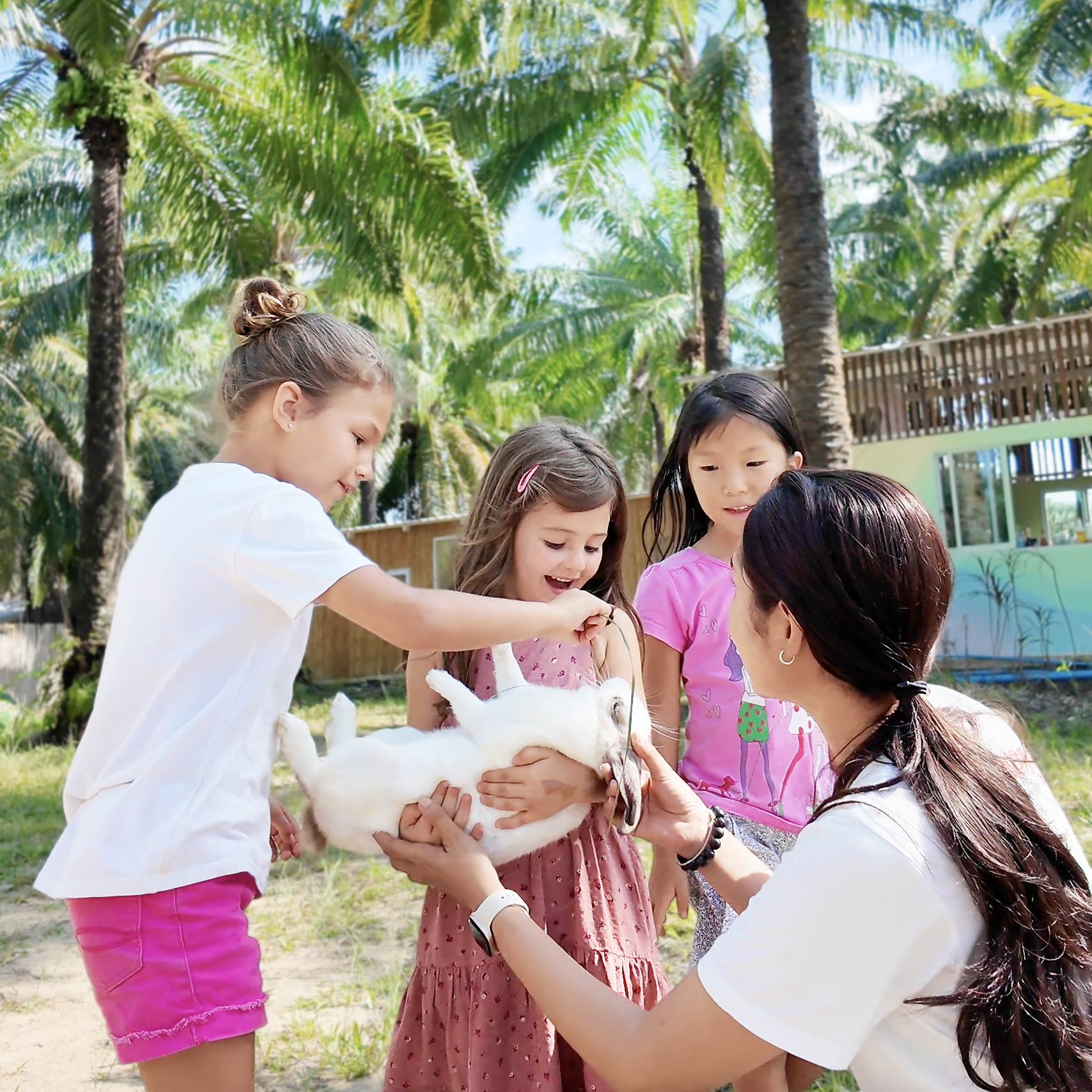
What kind of animals do children interact with?
We have rabbits, goats, and chickens on campus. Children help feed them, refill water, and learn to handle them gently. It teaches responsibility and care — and there's something deeply calming about petting a rabbit after rest time.
Why gardening?
Planting seeds, watering, watching things grow — it's science, patience, and wonder all in one. Children connect to where food comes from. And there's nothing like eating a tomato you grew yourself.
Is the afternoon very structured?
Less than the morning. After a full day, children need gentler rhythms. Some days it's a group activity like yoga. Other days, children choose between stations — animals, garden, art table, or simply more outdoor play.
Pickup
Parents arrive and children run to greet them — sometimes mid-game, sometimes covered in mud or paint. Teachers share a quick word about the day. There's a goodbye song, a wave, and off they go — tired, happy, and full of stories to tell.
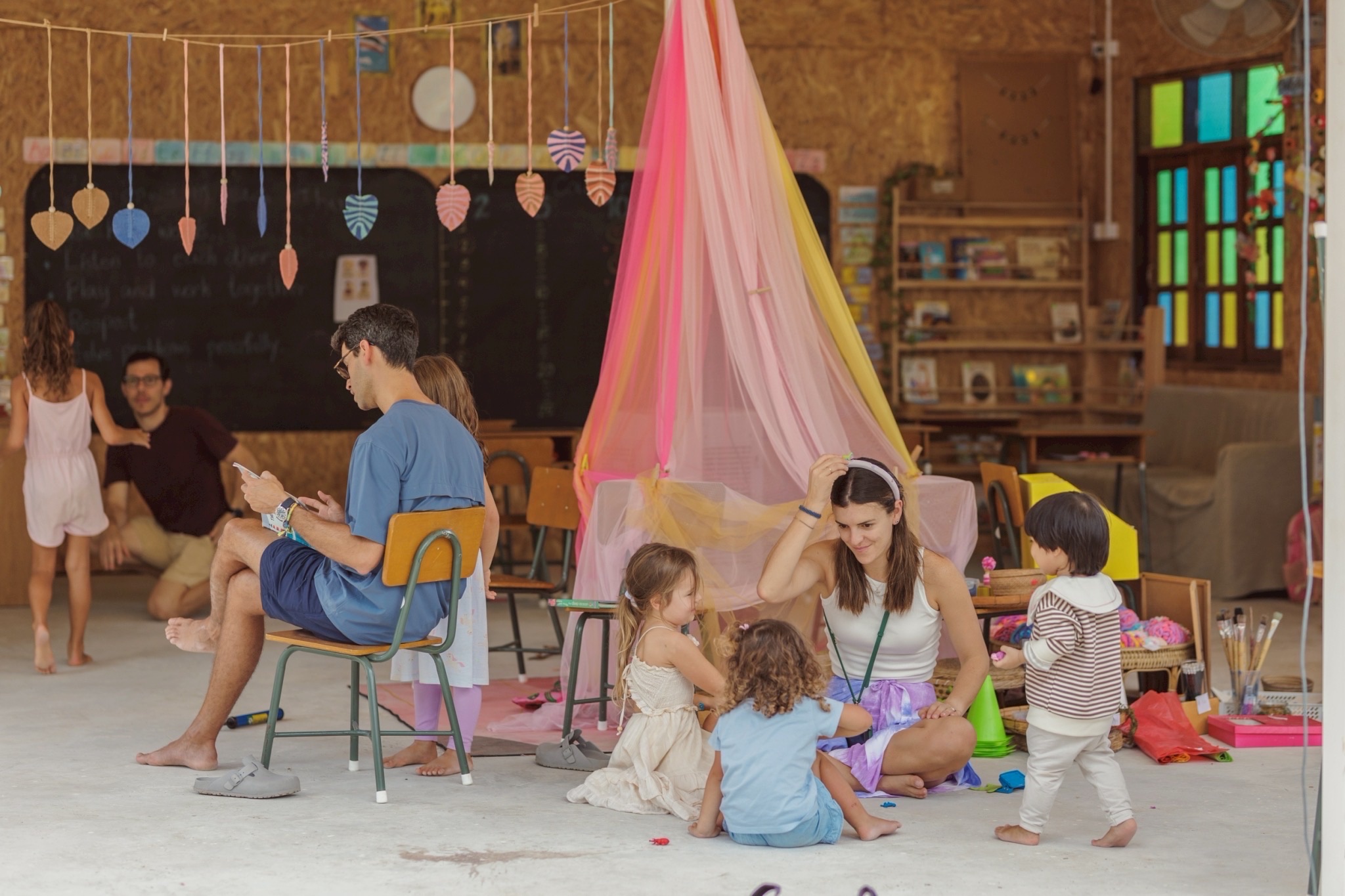
What do teachers tell parents at pickup?
A quick highlight — what they enjoyed, who they played with, anything noteworthy. Not a formal report, just a moment of connection so parents feel part of the day.
If something needs a longer conversation, we schedule time to talk properly.
After-School Program
For families who need a later pickup, our After-School Enrichment Program runs until 4:30pm. Children ages 3-6 explore creativity and culture through hands-on activities — Thai cooking, nature crafts, music, and phonics — while the rest of their classmates head home.
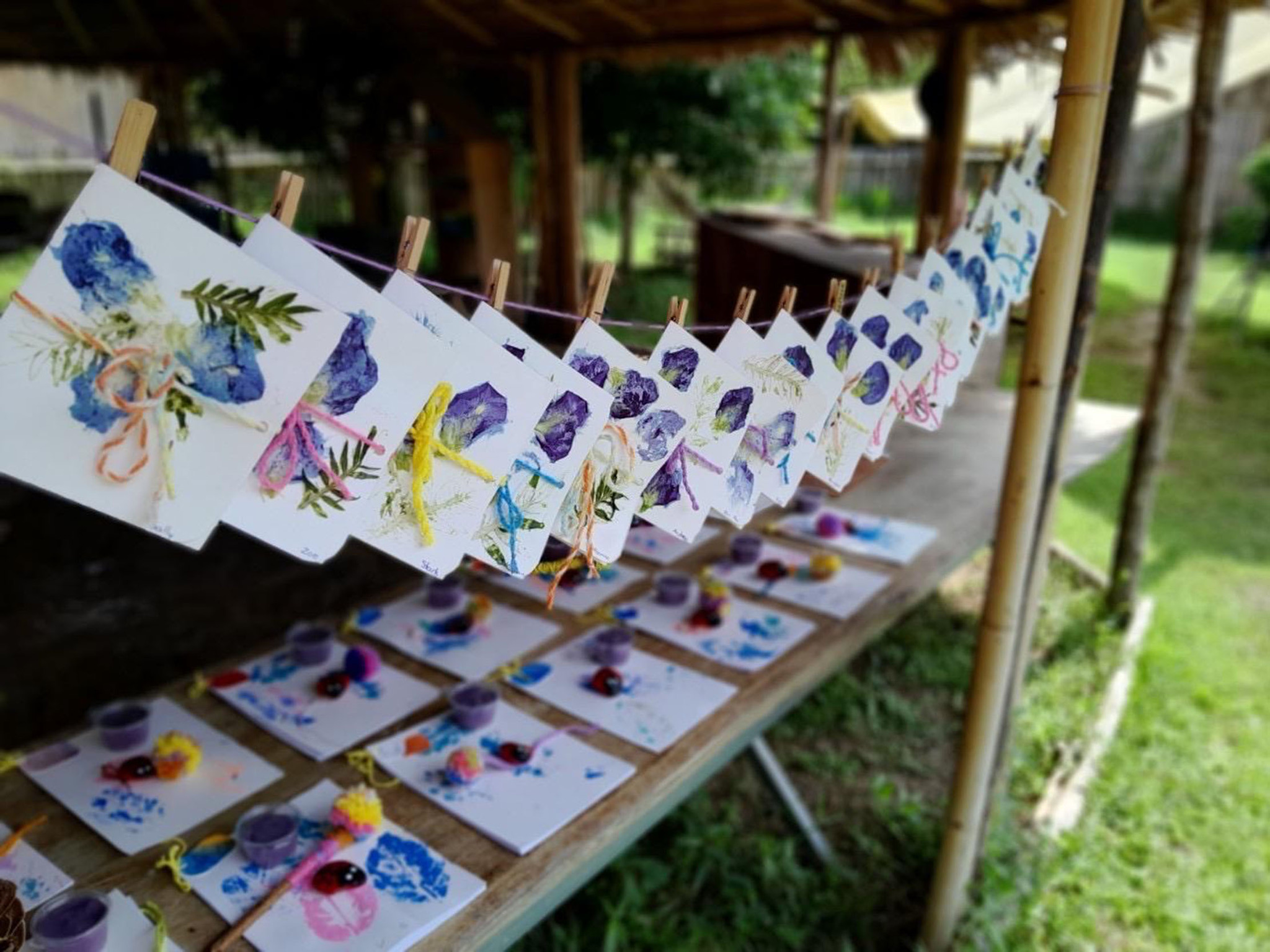
What activities are offered?
Each day has a different focus: Thai Cooking on Monday, Nature Art & Craft on Tuesday, Music & Sound on Wednesday, and Phonics on Friday. It's enrichment, not just extended care.
Is it the same as staying longer at school?
No — this is a separate program with dedicated activities and smaller groups. Children who stay aren't just waiting around; they're learning something new.
Can I sign up for specific days?
Yes. You can choose which days work for your family's schedule. Some children come every day, others just once or twice a week.
Come See for Yourself
That's a day at Bamboo Valley — arrival to pickup, mud to music, stories to silence. No two days are exactly alike, but the rhythm stays the same. Children know what to expect, and within that structure, they're free to explore, create, and simply be children.
Words and photos can only show so much. The best way to understand what we do is to walk through the gate, feel the shade of the palms, and watch the children play.
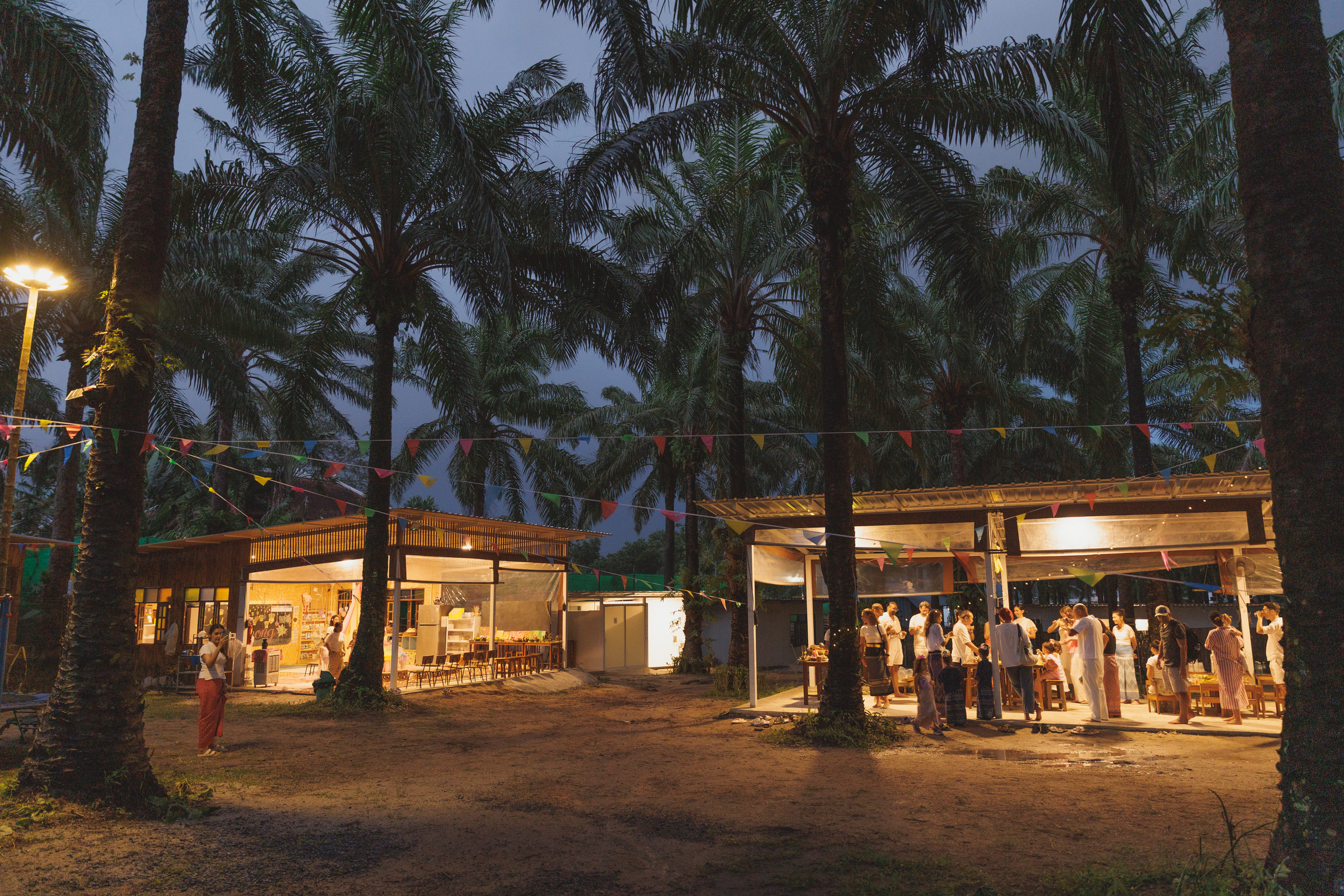
We'd love to show you around
Schedule a visit to meet our teachers, see the campus, and feel the rhythm of our day.
Book a Visit