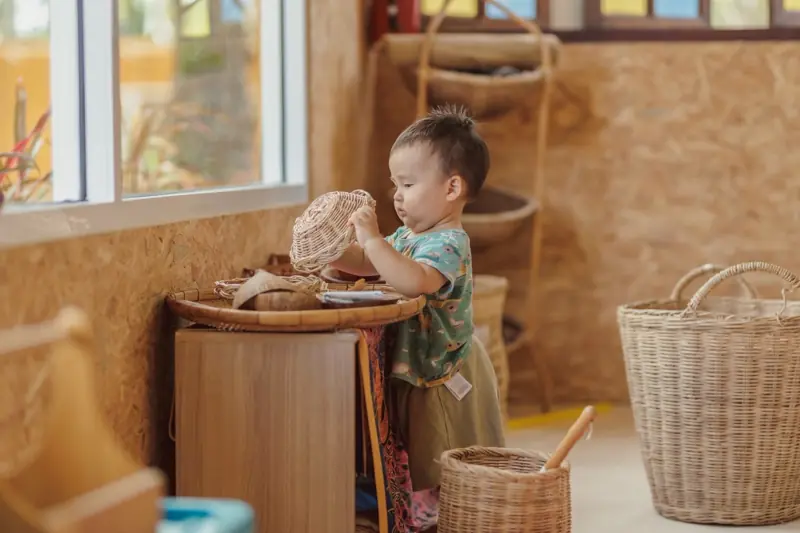
Ages 2 to 3
Nursery
Half day until 12:30, or a full day until 15:00. Nappies are fine, and nobody needs to be toilet trained. A gentle rhythm of circle, free play, snack, gardening and rest.
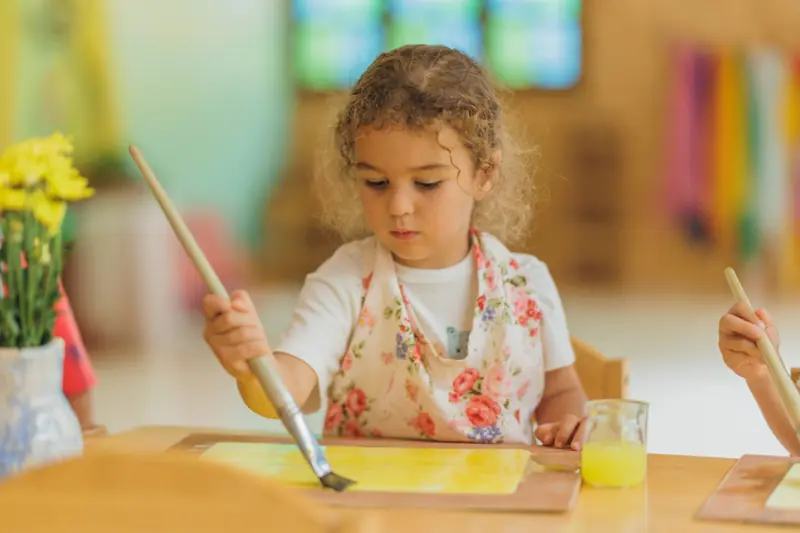
Ages 2 to 6, in a nature park in Cherngtalay.
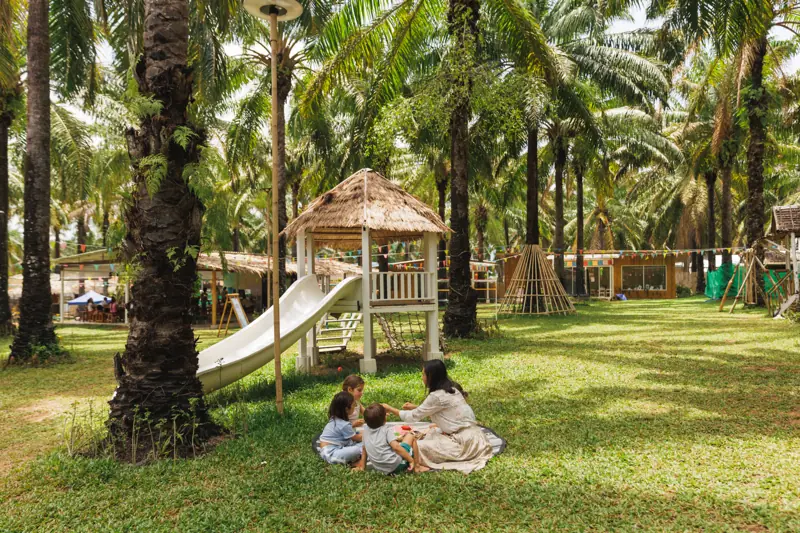
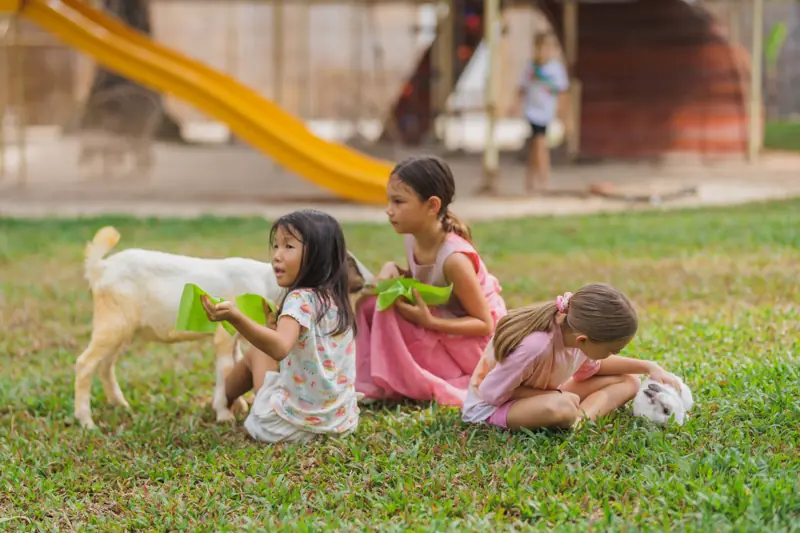
A three-year-old learns by doing: digging for forty-five minutes, kneading dough, feeding a goat, negotiating who gets the bucket. So the kindergarten day is full of real materials and time outdoors, with teachers who watch closely and step in only when they need to.
It isn't only play. Phonics is woven in every day, a few minutes at a time, with a teacher and two children. Maths, music and fine-motor work have their own slots.
“Through play, children build resilience, independence, problem-solving skills, communication, and confidence, both physically and emotionally.”
Ages 2 to 3
Half day until 12:30, or a full day until 15:00. Nappies are fine, and nobody needs to be toilet trained. A gentle rhythm of circle, free play, snack, gardening and rest.
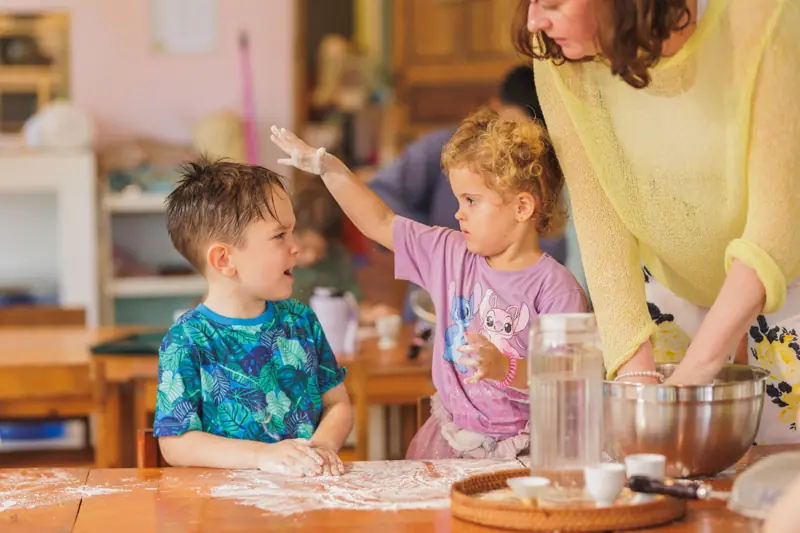
Ages 3 to 6
Circle and phonics every morning, then outdoor play, baking, projects, painting, maths and music through the week. Story and quiet time after lunch.
The same rhythm every day, so children always know what comes next.
8:45
Drop-off between 8:45 and 9:00. Bags down, hello to friends.
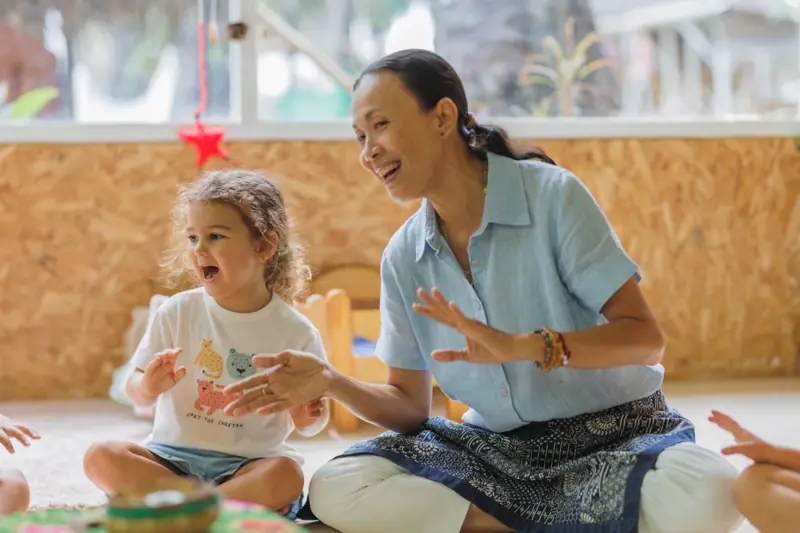
9:00
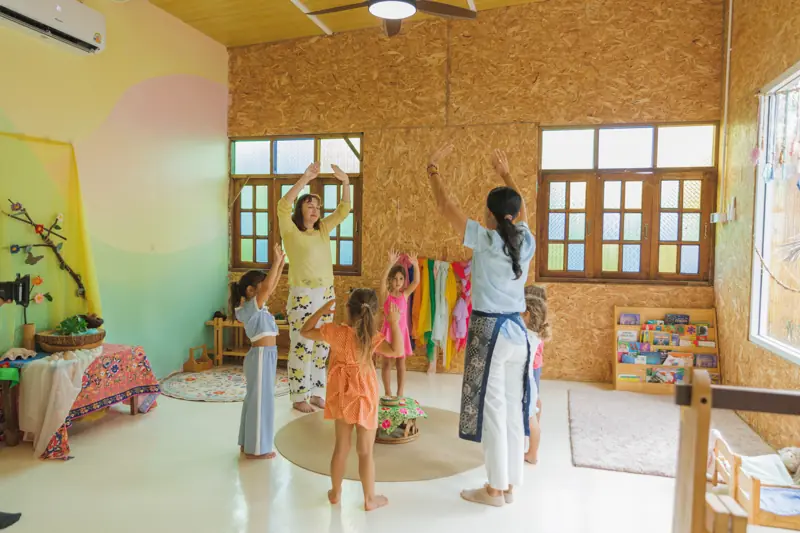
First thing every morning. Songs, games and sounds, at each child's own level.
9:30
Half an hour to play before circle.
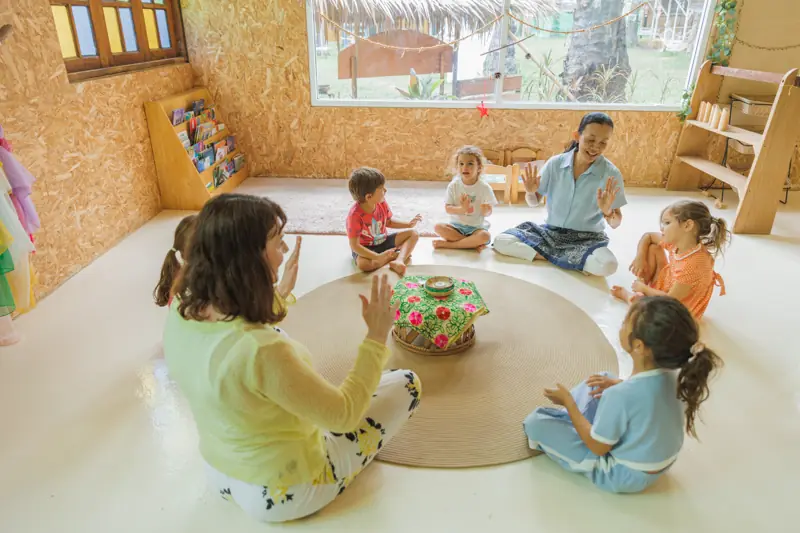
10:00
The same songs every morning. They change with the seasons; the rhythm doesn't. Yoga on Tuesday and Thursday, phonics games on Monday and Friday.
10:15
A morning snack together.
10:30
Maths on Monday and Wednesday, baking on Tuesday, Waldorf painting on Thursday, animal care on Friday.
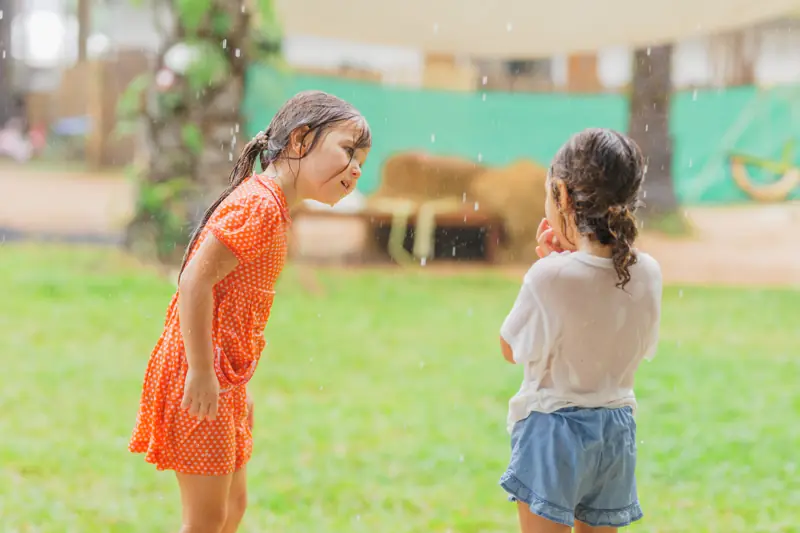
11:00
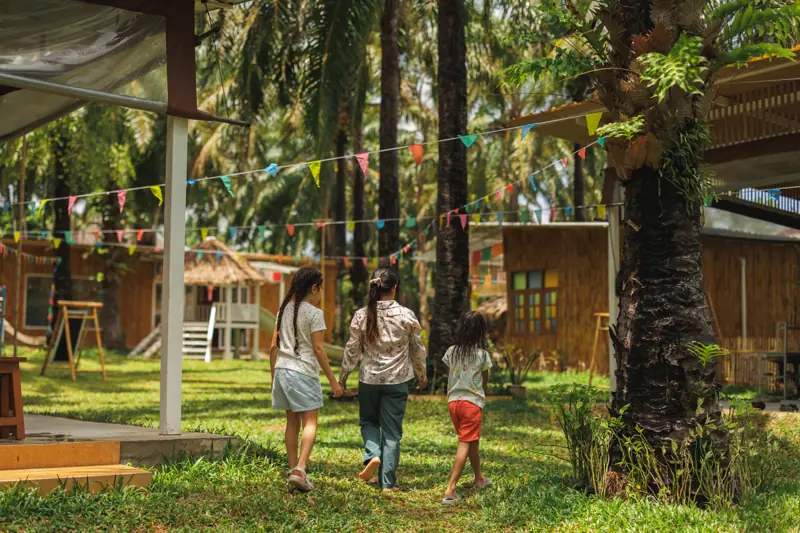
Free play and woodland crafting under the palms.
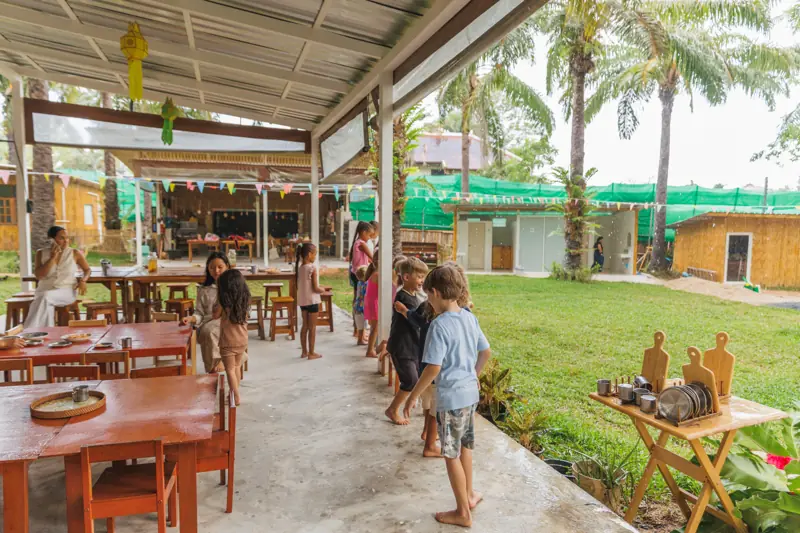
12:00
The teachers sit at the same table and eat the same food. A gratitude song first.
12:30
A story told from memory, often the same one all week. Then quiet time, or a nap on a mat with a blanket.
13:50
Crafts and group activities on Monday, Wednesday and Friday, gardening on Tuesday, animal care on Thursday.
15:00
Snack at 14:30, then pick-up between 15:00 and 15:15.
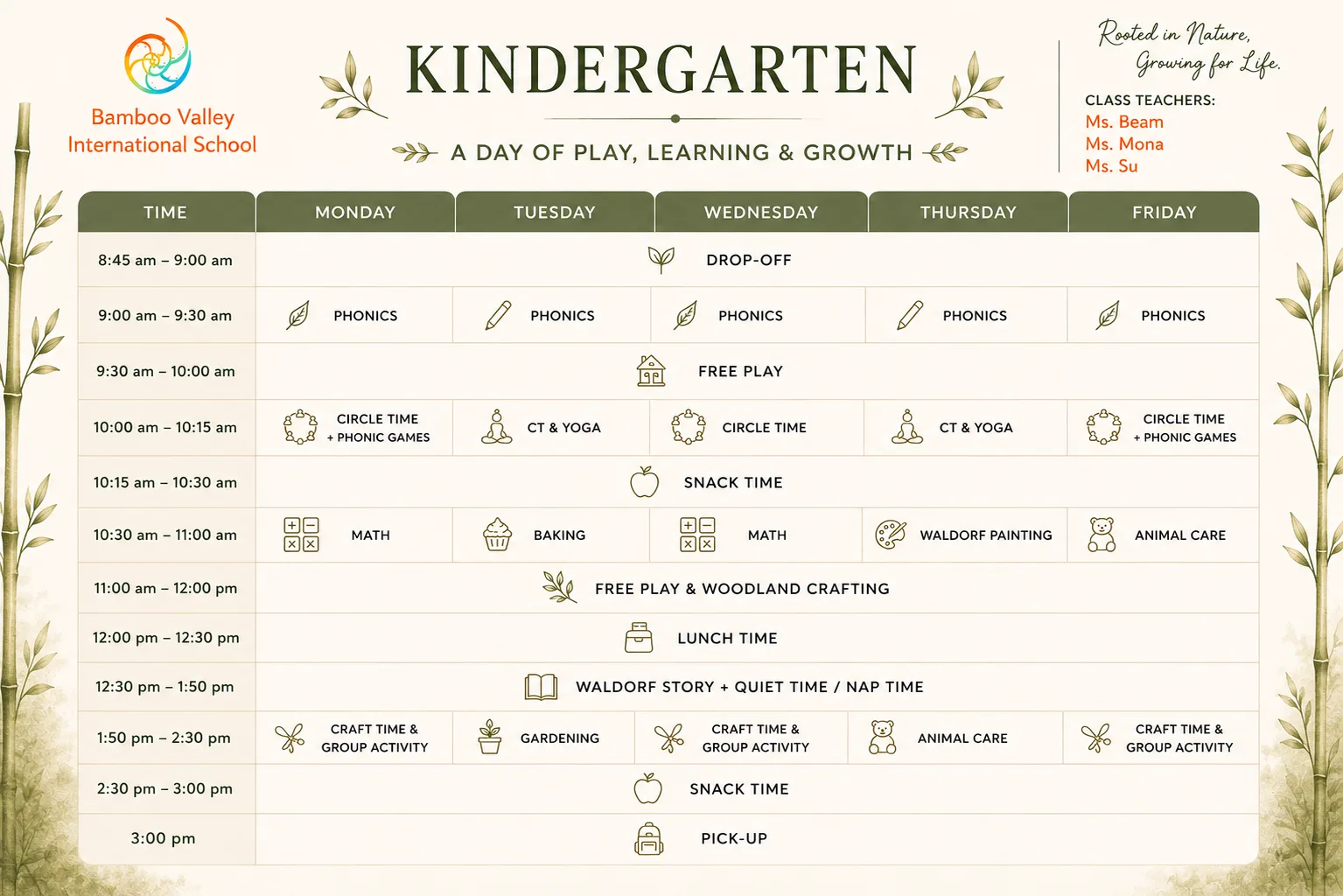
Tap the timetable to see it full size.
Children carry it carefully from hand to hand. Kindness is something they feel, not something they're told.
Waldorf painting starts with a single colour for a whole month before a second is added.
Told without a book, so the teacher can watch the children's faces and the children make the pictures in their heads. Often the same story all week.
When children know what comes next, they feel safe. New children know the songs after two or three days.
Then everyone eats together, teachers included.
The children feed them. When a child is upset, time with the animals is often what settles them.
Crying at drop-off in the first week is normal. It usually fades over two or three weeks, and by the third month most children wave goodbye. Goodbyes work best when they're short; most children are calm within ten minutes.
If your child needs it, we start gradually: pick-up after snack, then after lunch, then full days, over a week or two.
“If the mother wants her child to feel safe and secure, it is important for her to stay calm and regulate herself first, as her emotions can really affect the child as well.”
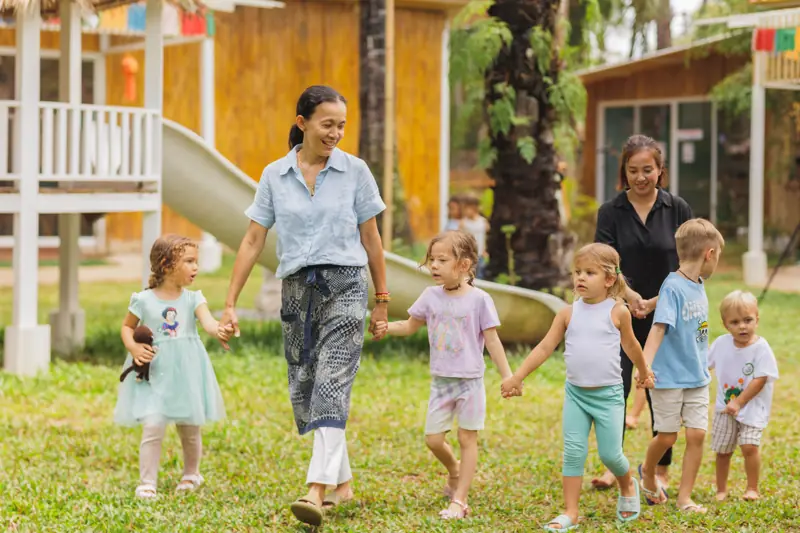

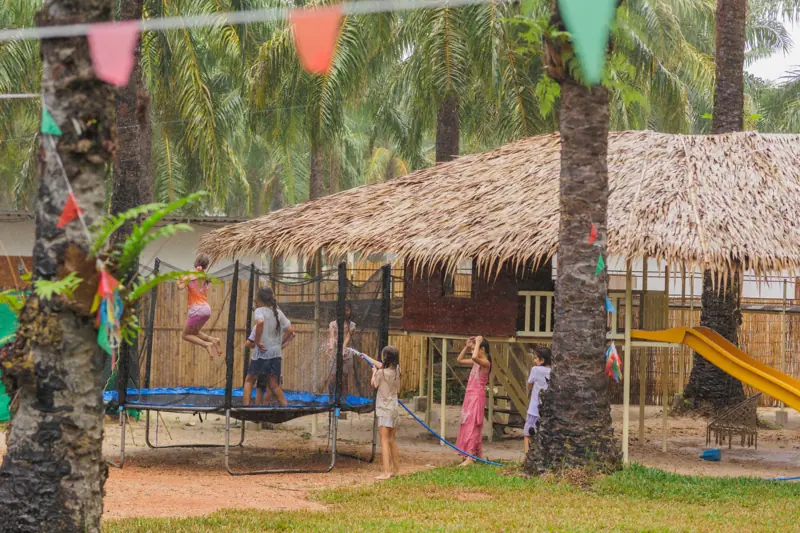
Teachers are always present and watching, but they don't hover. Children learn to judge risk for themselves: can I reach that branch, is this too high? A small bump is part of learning. No member of staff is ever alone with a child, and children are only released to a parent or an adult you have named.
English is the language of the school, and Thai language and culture classes are included. Our families come from more than fifteen countries.

Khun Su, Khun Beam, Miss Diana and Miss Mona, with Margherita Gasparini teaching phonics
“Play is children's work, and it is one of the most important ways young children learn and develop.”
“When they are eager to learn, I feel so happy to share everything I know and support them in every way I can.”
The best way to judge a school is on an ordinary day. Bring your child; they'll tell you more than we can.
The booking page shows times in your own timezone.
A private tour on a school day. Children welcome.
One online form, with passports, a recent school report and a few short videos of your child.
Five days in class, paid at the weekly rate on the fee sheet. The teachers get to know your child, and you see whether this school is right for your family. No child fails a trial week.
Sign the agreement, pay, and your child starts. Mid-year starts are welcome.