
Skip to content
Bamboo ValleyInternational School

Book a visit

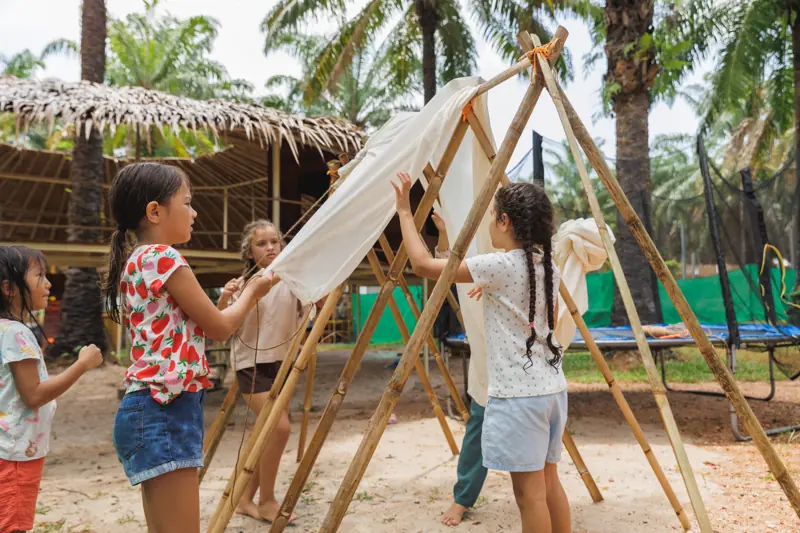
Three girls and a teacher draping fabric over a bamboo tipi they built

Primary

Grades 1 to 4, in two mixed classes. Grades 5 and 6 are planned for next year.

Will my child keep up?

Mornings are for reading, writing and maths: structured lessons following the British curriculum, in proper classrooms.

What's different is how children get there. Last year one class held a child who spoke no English, a child with dyslexia and a child who had taught herself to read at two and a half. Each got lessons at their own level, in the same room.

There's no homework and there are no worksheets. Teachers assess through observation and real work, and every term each family gets a written report and a one-to-one meeting.

“No homework or worksheets doesn't mean lower expectations. We still teach and assess the same core skills, but through hands-on experiences. Instead of a measurement worksheet, students might build something, measure materials, record their results, and explain their thinking.”
Trinity Jones, Grades 3 and 4
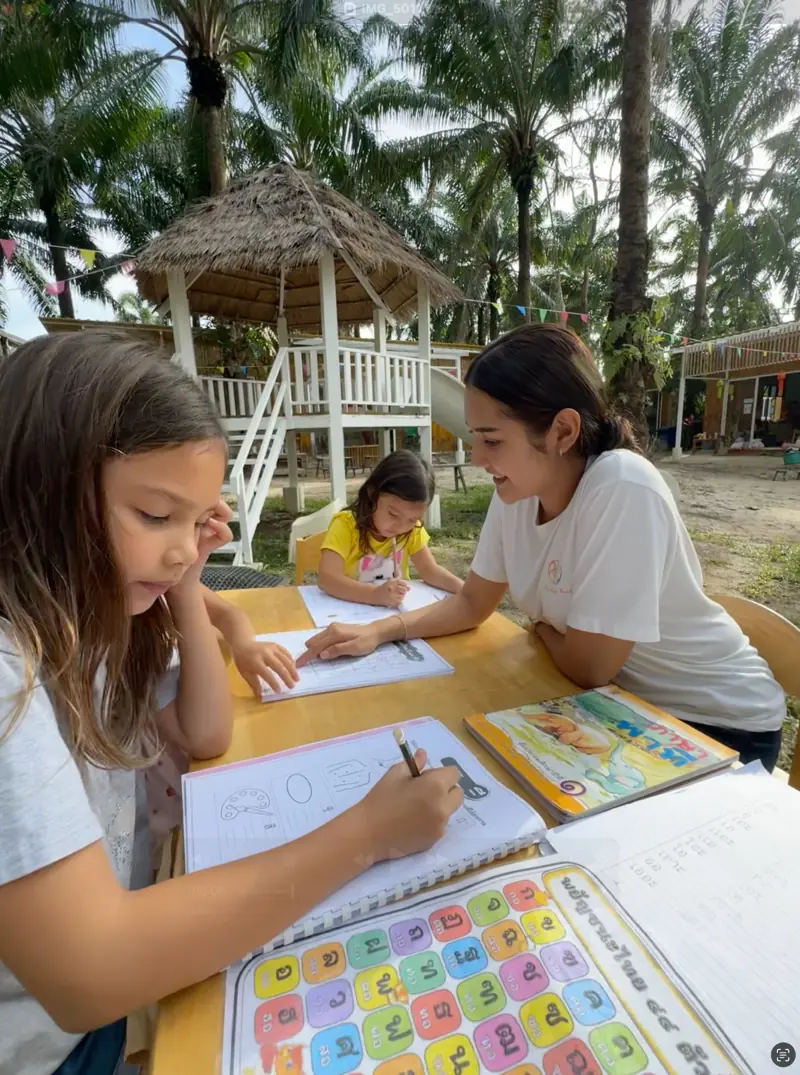
A girl writing in a workbook with her teacher at an outdoor table

A primary day

The same rhythm every day, so children always know what comes next.

Circle or yoga

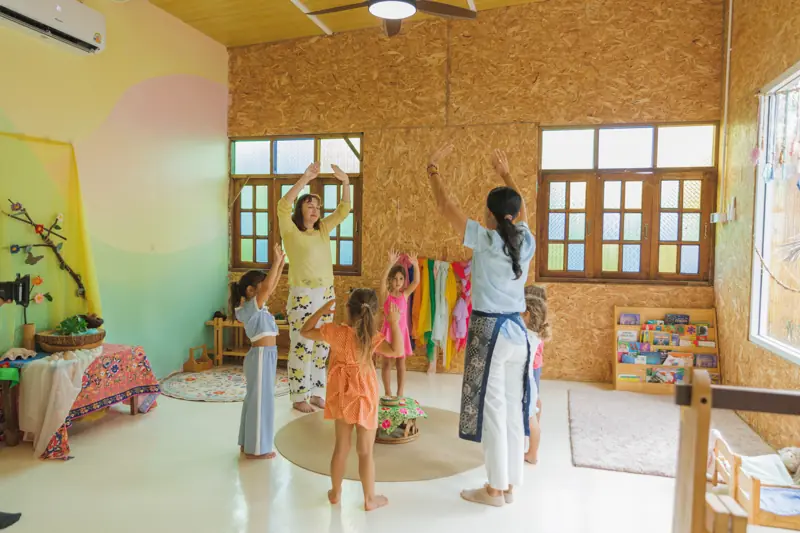
  1. Teachers and children moving together in a pastel classroom

    9:00

    Circle or yoga

    Morning circle on Monday, Wednesday and Friday. Yoga on Tuesday and Thursday.

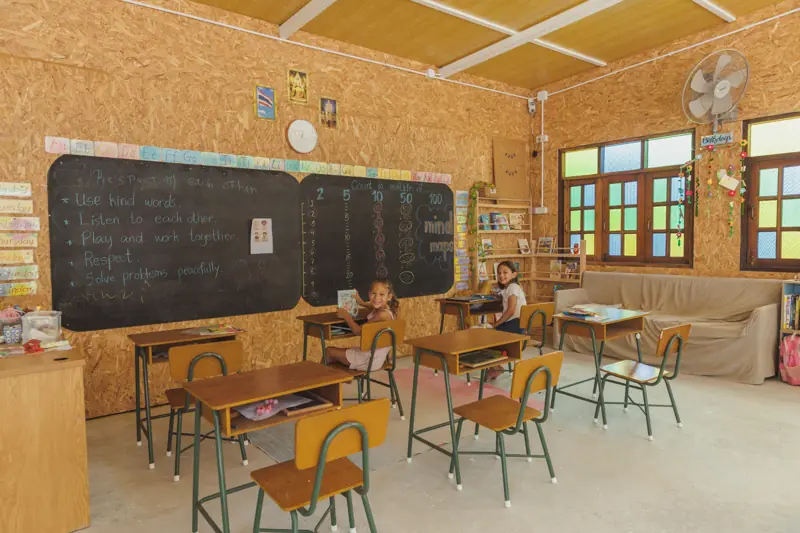
  2. The primary classroom with wooden desks and a chalkboard

    9:30

    Phonics, reading and writing

    Structured lessons every morning, following the British curriculum. Each child works at their own level. Friday morning is social studies.

  3. 10:15

    Snack

    A short break outside.

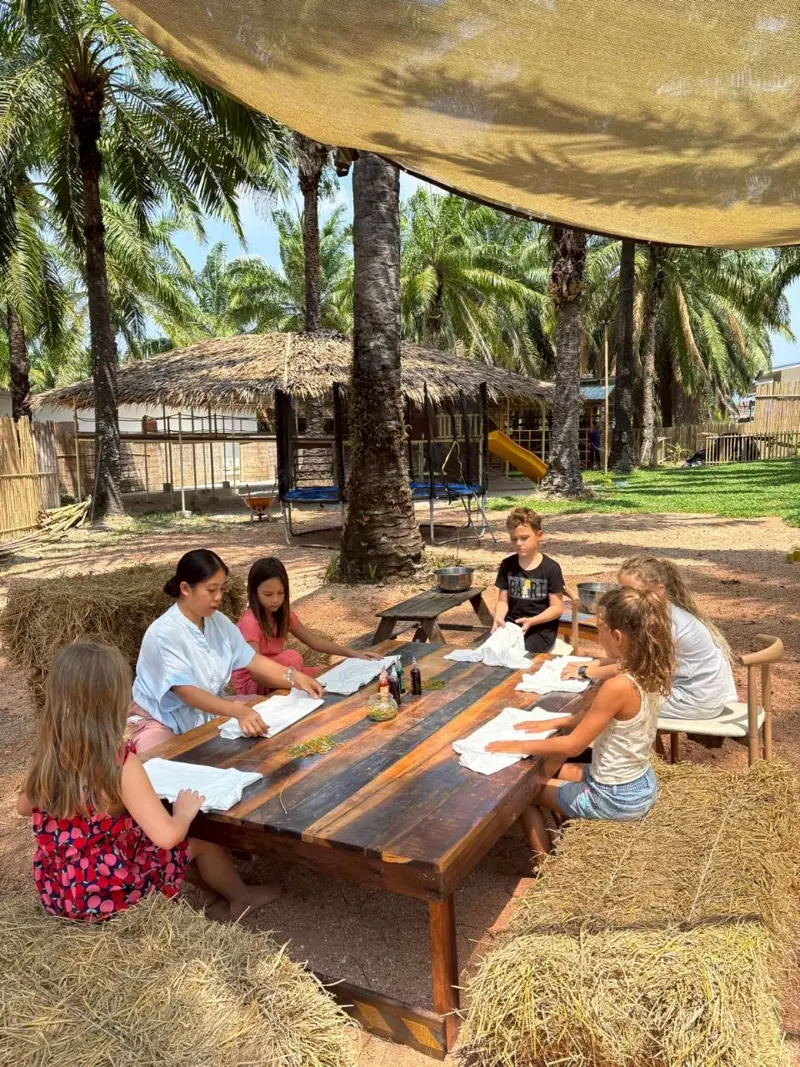
  4. Older children working at a long wooden table under a shade sail

    10:30

    More literacy, then maths

    Reading, writing and maths until lunch, indoors or outside under the shade sail. P.E. on Friday.

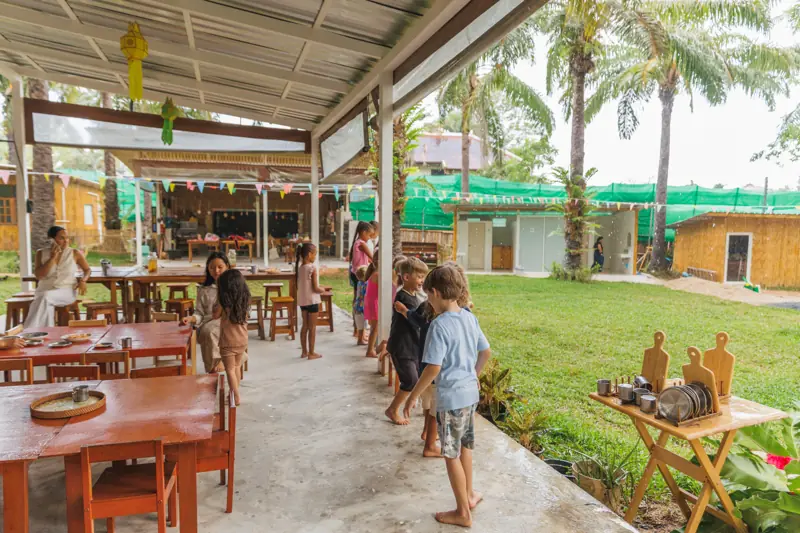
  5. Children lining up at the open-air dining pavilion

    12:00

    Lunch

    Lunch together, then the afternoon opens up.

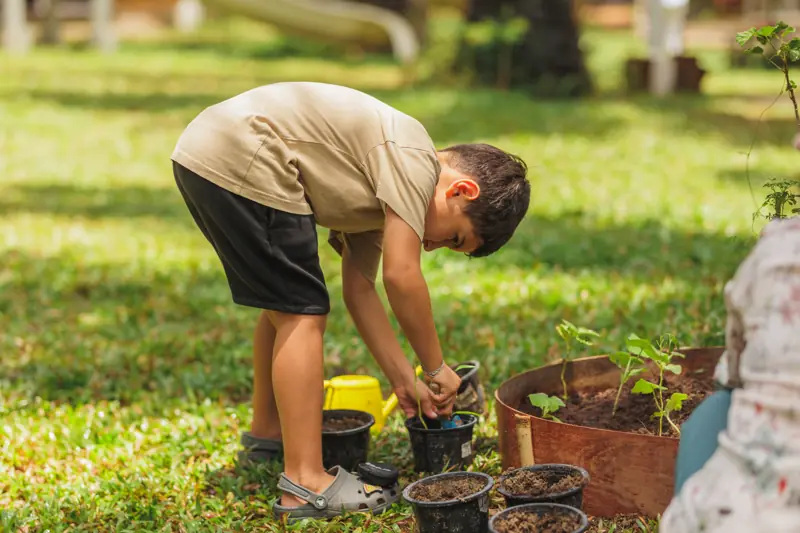
  6. A boy tending seedling pots in the sunlit garden

    12:45

    A different afternoon each day

    Library, science, Thai, gardening, animal care, woodwork, baking and more. The week is below.

  7. 15:00

    Pick-up

    Snack at 14:45, then pick-up between 15:00 and 15:15.

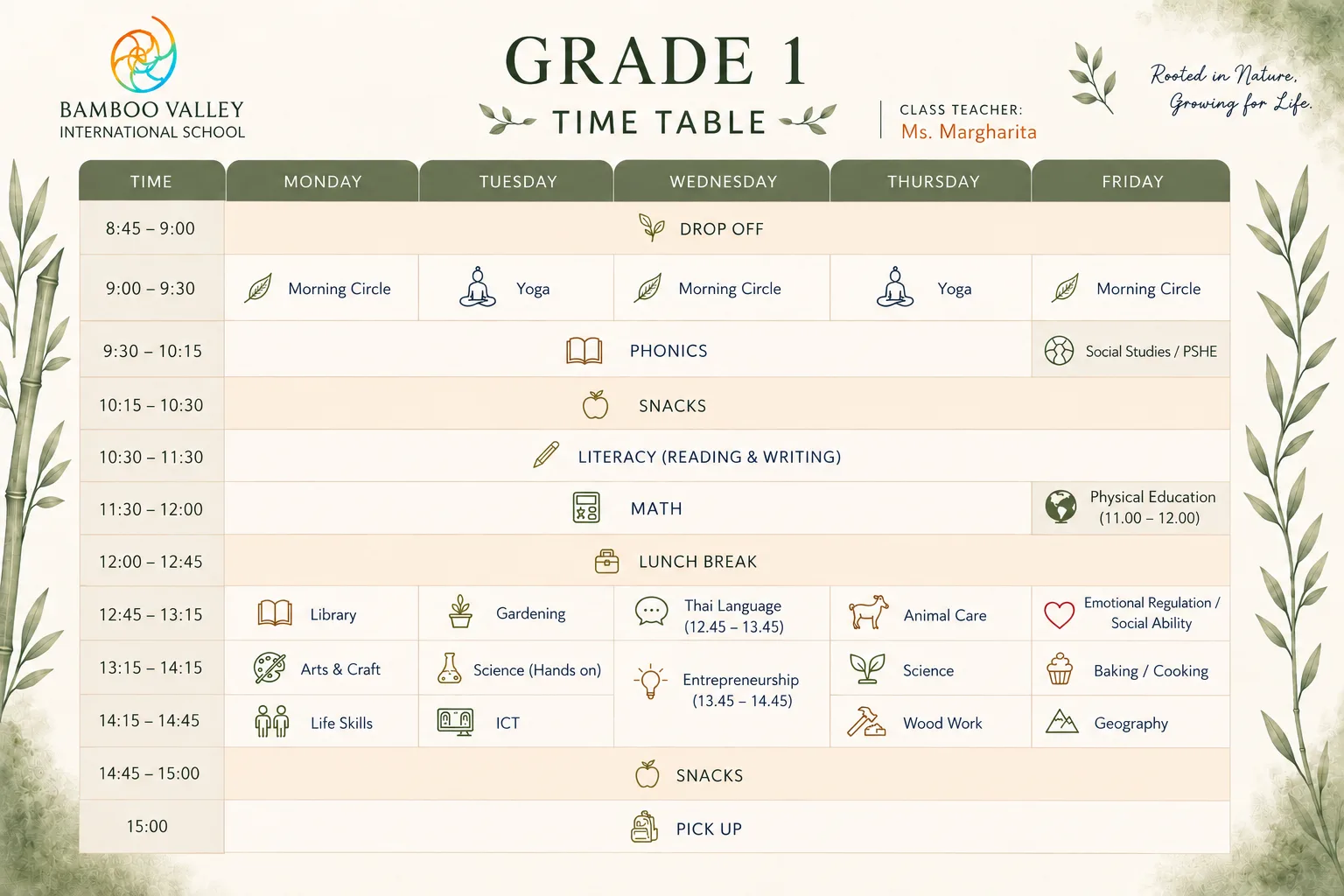
Lower Primary timetable
The Lower Primary timetable, Monday to Friday: drop-off at 8:45, morning circle or yoga, phonics, snack, reading and writing, maths, lunch, then afternoons of library, arts and craft, life skills, gardening, science, ICT, Thai, entrepreneurship, animal care, woodwork, baking and geography, snack and pick-up at 15:00.

Tap the timetable to see it full size.

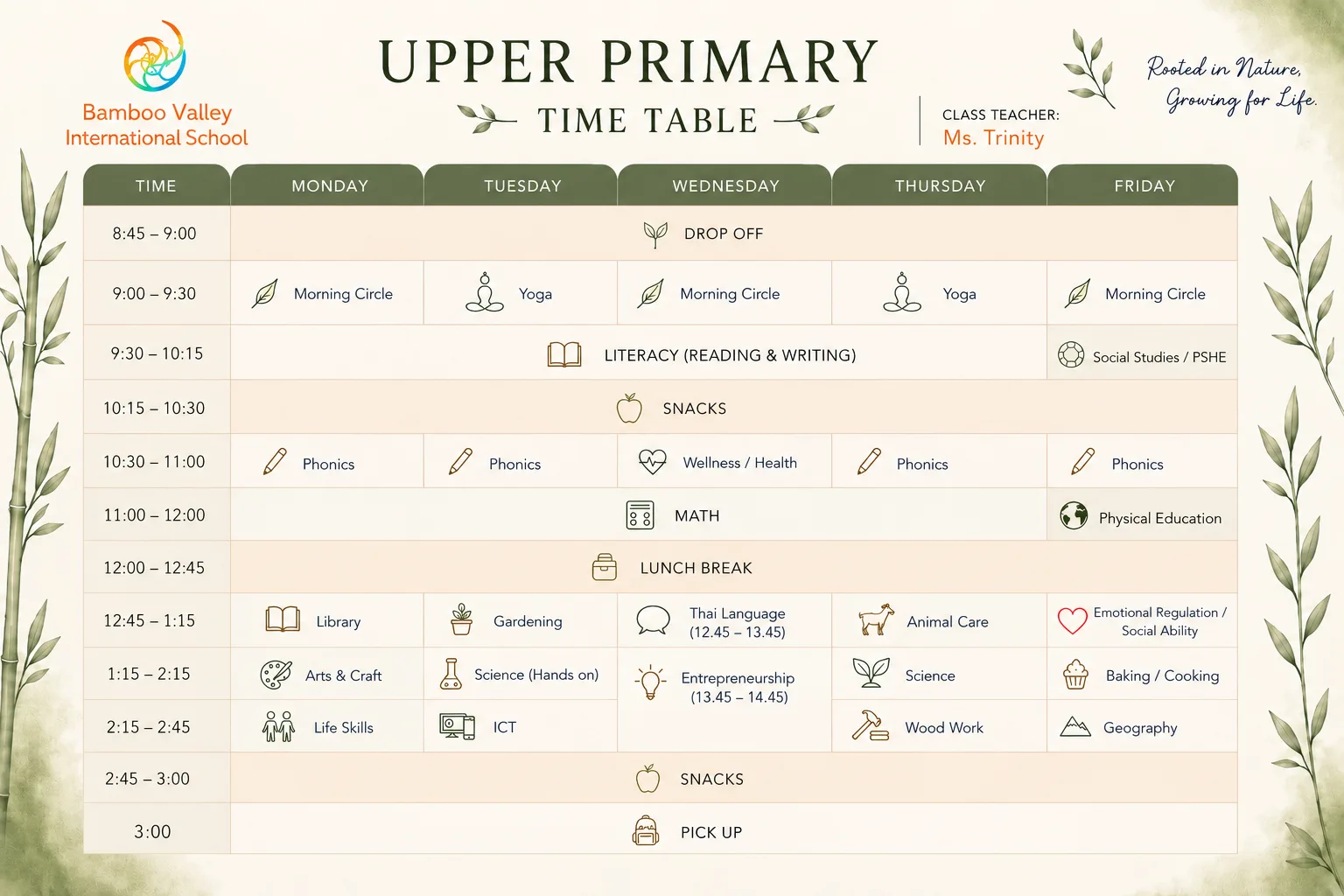
Upper Primary timetable
The Upper Primary timetable, Monday to Friday: drop-off at 8:45, morning circle or yoga, reading and writing, snack, phonics, maths, lunch, then afternoons of library, arts and craft, life skills, gardening, science, ICT, Thai, entrepreneurship, animal care, woodwork, baking and geography, snack and pick-up at 15:00.

Tap the timetable to see it full size.

Across the week

Monday: Library, art and life skills

Library time, arts and craft, and a life skills lesson.

Tuesday: Garden, science and ICT

Gardening, a hands-on science lesson, and ICT.

Wednesday: Thai and entrepreneurship

A double Thai lesson, then entrepreneurship. Upper Primary also has wellness and health in the morning.

Thursday: Animals, science and woodwork

Animal care, science, and woodwork.

Friday: Getting along, baking and geography

Social studies and P.E. in the morning. After lunch, a lesson on handling big feelings and getting along, then baking and geography.

Afternoons: science, Thai, woodwork and the garden

Hands-on science twice a week. A double Thai lesson on Wednesday. Library, gardening, animal care, arts and craft, woodwork, baking and life skills through the week. And every chance to move a lesson outside.

“If we were studying the water cycle, instead of giving them worksheets where you cut and paste, I would create little ziplock bags and have the students put water in it and then put them outside in the sun… If they see it first hand, it will be more meaningful for them because they created it themselves.”
Margherita Gasparini, Grades 1 and 2
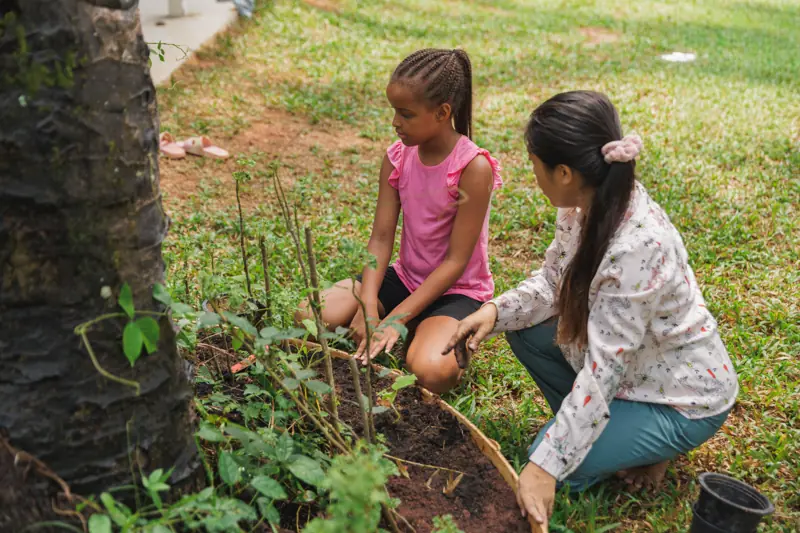
A girl and her teacher studying plants at the base of a palm
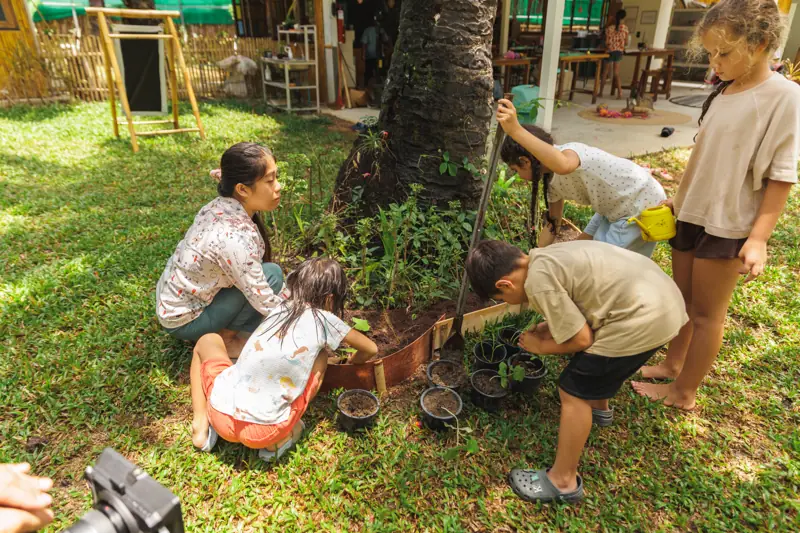
A teacher with children planting a raised bed beside a palm
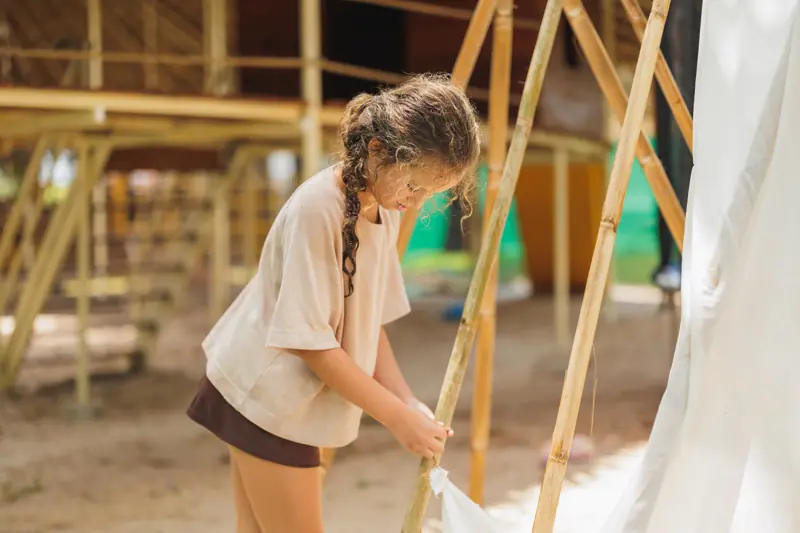
A girl lashing bamboo poles together for a fort
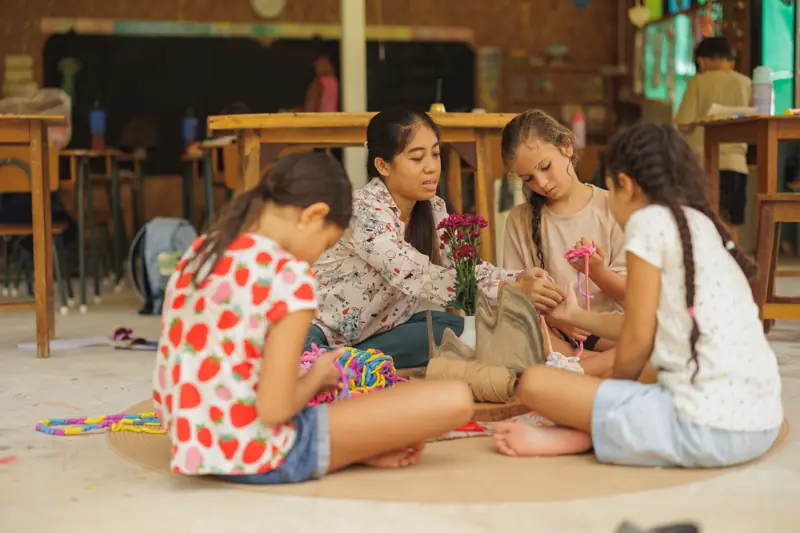
A teacher and three girls working together on the classroom floor

Learning to get along

A child in the middle of a meltdown isn't choosing anything. They're just trying to feel okay. So handling feelings has its own lesson: every Wednesday there is a lesson on emotional regulation and getting along, and yoga twice a week.

When something goes wrong, the teachers work out why with the child, and with the parents when it helps. We use Dr Ross Greene's Collaborative and Proactive Solutions approach.

“I think those moments are really important opportunities to teach emotional regulation rather than simply punish the behavior.”
Trinity Jones
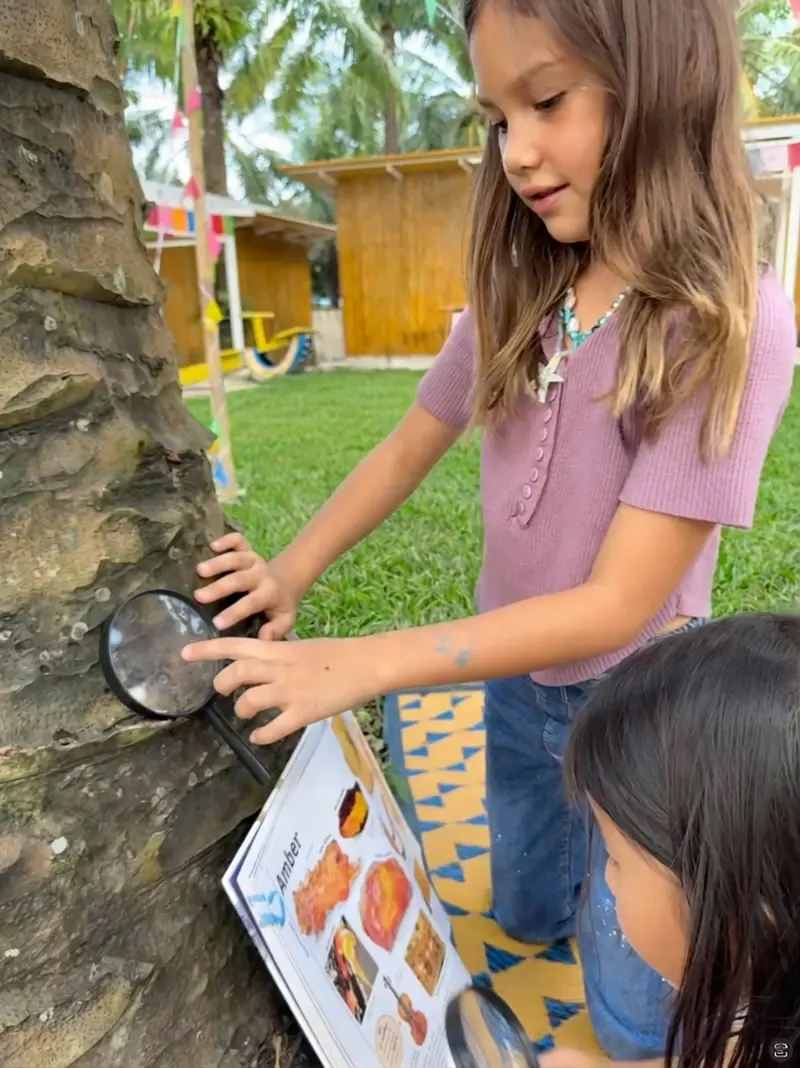
A girl studying a palm trunk with a magnifying glass and an insect chart

The Amber Club

Our daughter Rey wasn't taught to read until she was six. She asked, because a younger friend was already reading and talking about her favourite books. Five minutes of phonics in the morning and five in the evening, because she wanted them. Within a couple of months she was reading basic books. By third grade she was reading at a fifth- to seventh-grade level.

Then she found a science book about amber, the fossilised resin of trees. She started looking for it across the nature park and studying the trees it comes from. A couple of her friends were drawn in. They called themselves the Amber Club, studied every tree on campus and kept journals of what they found.

Reading turned into writing, into science, into working together. They built all of it themselves.

Marc and Nutthanit

The people your child spends the day with

English is the language of the school, and Thai language and culture classes are included. Our families come from more than fifteen countries.

Margherita Gasparini

Grades 1 and 2

Certified Ontario teacher. Bachelor of Education, Nipissing University, Canada. Previously Reception teacher and preschool lead at Kasalong Kids International School in Mae Sot. Speaks English, Italian, French and Spanish.

“I believe that nature is a wonderful teacher and you can teach anything from phonics, to math, to science using natural resources.”

Trinity Jones

Grades 3 and 4, ESL specialist

Licensed elementary teacher (Tennessee, K–5) with an ESL endorsement for PreK–12. BSc Elementary Education, East Tennessee State University. Trained in trauma-informed classroom practice.

“My goal would be to understand, support, and teach, not just correct.”

And after Grade 4?

Grades 5 and 6 are planned for next year, growing with the children we have. If your child is older than ten today, write to us and we'll tell you honestly whether we're the right fit.

Come on a school day

The best way to judge a school is on an ordinary day. Bring your child; they'll tell you more than we can.

The booking page shows times in your own timezone.

  1. 1

    Visit

    A private tour on a school day. Children welcome.

  2. 2

    Apply

    One online form, with passports, a recent school report and a few short videos of your child.

  3. 3

    Trial week

    Five days in class, paid at the weekly rate on the fee sheet. The teachers get to know your child, and you see whether this school is right for your family. No child fails a trial week.

  4. 4

    Welcome

    Sign the agreement, pay, and your child starts. Mid-year starts are welcome.

Fees and full details